For global buyers, choosing the best First Aid Manikin in 2026 requires more than comparing prices. Training priorities differ between schools, hospitals, volunteer groups, and workplace teams. The right model should support realistic chest compressions, rescue breathing, choking practice, and clear performance feedback. It should also withstand repeated sessions, transport, cleaning, and occasional rough handling. Small details matter. A stiff airway can frustrate learners. Weak skin materials can fail quickly.
Dr. Michael Sayre, an emergency physician and CPR education specialist, has emphasized, “Anybody can learn CPR.” This principle keeps product selection focused on usability, not impressive specifications alone. Experienced instructors should examine compression depth feedback, anatomical accuracy, replacement parts, software stability, and maintenance requirements. Buyers should also request evidence from manufacturers, including test methods, warranty terms, and user references. A demonstration often reveals more than a brochure.
No single First Aid Manikin suits every training environment. Some buyers may overvalue advanced sensors while overlooking repair costs. That is worth questioning. Independent evaluations, practical trials, and instructor feedback can reduce procurement mistakes. Global purchasers must also consider language support, electrical compatibility, shipping protection, and local service access. These details influence training continuity after the purchase. A dependable manikin should feel realistic enough to build confidence, yet simple enough for frequent classroom use. The strongest choice is not always the most expensive one. It is the model that delivers consistent practice, measurable feedback, and reliable support over time.
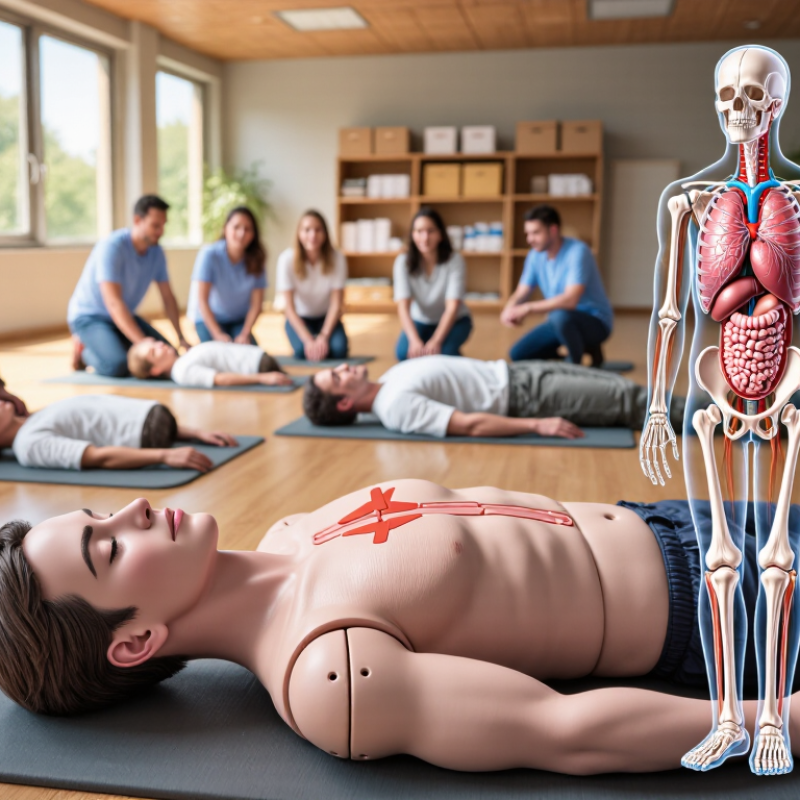
A first aid manikin is a training body used to practise CPR, rescue breathing, choking response, and patient assessment. It usually includes a torso, head, airway, and feedback features that show compression depth, speed, or hand position. In a classroom, learners can feel the difference between a shallow push and a controlled compression. That physical feedback matters.
Who needs one in 2026? Schools, workplaces, gyms, care facilities, community groups, and professional training centres all benefit from regular practice. Emergency instructors use manikins to demonstrate airway opening and recovery positioning. Workplace teams can repeat drills near reception desks, kitchens, or warehouse floors. Home caregivers may also use a compact model when supporting older adults or children. A suitable manikin should match the learner’s age group and training goals. Adult, child, and infant bodies require different techniques.
Quality matters. Durable skin, replaceable airways, easy cleaning, and clear feedback support safer instruction. Some models record performance, while simpler models still teach essential hand placement. In my training experience, realistic resistance improves confidence, but realism can also distract beginners. A manikin cannot reproduce panic, noise, or a real person’s medical history. That limitation deserves honest discussion. Trainers should combine practice with current local guidance, supervised correction, and regular refreshers. A single session is rarely enough. Skills fade quietly.
A first aid manikin is a training model used to practise CPR, rescue breathing, choking response and other emergency procedures. The chart shows internationally recognized CPR compression-depth targets that a suitable manikin should support for adult, child and infant training.
Reference basis: CPR compression-depth recommendations from major international resuscitation guidelines, including American Heart Association and European Resuscitation Council guidance. Adult target is approximately 5–6 cm; child target is approximately 5 cm; infant target is approximately 4 cm.
2026 Best First Aid Manikin for Global Buyers?
Modern first aid manikins should support accurate practice, not merely look realistic. A responsive chest should allow learners to feel compression depth and recoil. Clear visual feedback can show ventilation volume, hand position, and compression rate. These details help instructors correct mistakes during live sessions.
A practical manikin should include replaceable airways, lungs, and facial parts. This design improves hygiene and reduces long-term maintenance costs. Some models also provide wireless performance reports for classroom review. That feature is useful when instructors manage many learners across different skill levels. Adult, child, and infant versions can support wider training programs. Different skin tones and body shapes may also improve learner engagement.
No simulator is perfect. A chest that feels too soft can create false confidence. A highly sensitive sensor may also distract beginners with constant alerts. Buyers should test the manikin with real training equipment before making a decision. Check cleaning procedures, spare-part access, storage strength, and software language options. Reliable documentation matters as much as advanced technology. Instructors should compare results with recognized first aid teaching guidance, then adjust practice methods when needed. A modern manikin becomes valuable when it produces clear feedback, survives repeated sessions, and helps learners build calm, repeatable actions.
2026 Best First Aid Manikin for Global Buyers?
How to Compare Manikin Types for Different Training Goals
Choosing a first aid manikin should begin with the lesson, not the catalog. A CPR torso suits repeated adult chest-compression practice. It is portable, easy to clean, and efficient for large classes. However, it cannot teach recovery-position movement or full-body assessment.
A full-body manikin supports broader scenarios. Learners can check breathing, open an airway, place a casualty safely, and practice coordinated team responses. This option needs more storage space. It also takes longer to disinfect between groups. For infant training, select a smaller model with realistic head positioning and visible chest movement. Infant anatomy requires gentler handling and different compression techniques.
Feedback features deserve careful comparison. Mechanical clickers may confirm compression depth, but they cannot measure every part of performance. Digital feedback can show rate, recoil, hand position, and ventilation volume. Still, screens may distract beginners from communication and patient assessment. Keep it practical. An instructor should test the manikin before purchase. Check skin seams, replacement parts, cleaning instructions, and battery access. Ask whether the device performs consistently after repeated sessions.
No manikin is perfect. Some realistic models feel less durable. Some durable models feel too artificial. That trade-off can weaken practice if ignored. Global buyers should also review training standards, local language support, delivery conditions, and service access. The best choice is the model that matches learner level, scenario range, teaching space, and maintenance capacity.
| Comparison Dimension | CPR Torso Manikin Adult upper-body model | Full-Body Adult Manikin Adult resuscitation and first-aid model | Child Manikin Pediatric patient model | Infant Manikin Baby resuscitation model | Airway Management Head Head-and-neck airway trainer | Trauma Simulation Manikin Advanced emergency-care model |
|---|---|---|---|---|---|---|
| Primary training goal | Basic adult CPR, chest compressions, rescue breaths, and AED positioning | Integrated adult CPR, recovery position, patient movement, and first-aid scenarios | Pediatric CPR, choking response, and age-specific emergency assessment | Infant CPR, back blows, chest thrusts, and infant choking response | Airway opening, ventilation, intubation practice, and suction procedures | Multi-step emergency assessment, bleeding control, airway care, and team simulation |
| Best suited for | Schools, workplaces, public CPR classes, and introductory courses | First responders, healthcare students, rescue teams, and realistic scenario training | Pediatric healthcare education, childcare staff, and family safety programs | Midwifery, neonatal care, childcare, and family first-aid training | Paramedic, nursing, anesthesia, and advanced airway courses | Hospitals, simulation centers, emergency-response teams, and advanced clinical programs |
| CPR feedback capability | Commonly supports compression depth, rate, recoil, and ventilation feedback when equipped with a feedback system | Can support CPR feedback plus more realistic body positioning and patient handling | Uses child-specific compression depth and rate settings; electronic feedback depends on configuration | Uses infant-specific compression technique and depth; feedback depends on configuration | Usually focuses on ventilation and airway technique rather than complete-body CPR feedback | May provide CPR and clinical feedback, but features vary significantly by model configuration |
| Airway training | Basic head-tilt/chin-lift and mouth-to-mouth practice; advanced airway features are limited | Basic airway opening and ventilation; some models add realistic airway obstruction features | Supports pediatric airway opening and ventilation practice; advanced procedures vary | Supports infant airway positioning and ventilation; advanced airway access is usually limited | Excellent for airway positioning, ventilation, suction, and selected advanced procedures | Excellent for complex airway and emergency-care scenarios when equipped accordingly |
| Choking-response training | Suitable for adult abdominal thrusts and chest thrust demonstrations, depending on design | Suitable for adult choking response and integrated patient-assessment drills | Designed for child-specific choking procedures and force control | Designed for infant back blows and chest thrusts; abdominal thrusts are not used for infants | Limited because the model does not normally represent a complete patient body | Strong for scenario-based choking response when the selected configuration includes the relevant features |
| Trauma and wound-care practice | Limited; mainly intended for CPR and basic life support | Moderate; suitable for positioning and selected first-aid scenarios | Limited unless the model includes dedicated pediatric trauma accessories | Limited; primarily focused on infant resuscitation | Limited because it represents only the airway region | Excellent for bleeding control, bandaging, splinting, assessment, and team-based trauma care |
| Portability | High; compact and convenient for frequent transport | Moderate; larger and heavier than a torso model | High to moderate, depending on construction and accessories | High; small size supports classroom and home-safety programs | High; compact format is suitable for skills labs and mobile courses | Low to moderate; advanced components and accessories increase transport requirements |
| Space required for training | Small; works well in classrooms with limited floor space | Moderate to large; requires room for kneeling, rolling, and patient-handling exercises | Small to moderate; floor-based practice is generally recommended | Small; suitable for tabletop or floor-based instruction | Small; usually used on a table or clinical training bench | Large; benefits from a dedicated simulation area and supporting equipment |
| Cleaning and maintenance | Usually simple; requires cleaning of skin surfaces and replacement of disposable airway or face components as applicable | More extensive; includes body surfaces, airway components, clothing, and moving joints | Generally simple, but pediatric face and airway parts require careful cleaning | Generally simple; infant airway and face components need regular inspection | Requires careful cleaning of airway passages and replacement of compatible disposable parts | More demanding; includes skin, wounds, tubing, electronics, joints, and scenario accessories |
| Typical durability considerations | Strong choice for high-volume basic CPR practice when replacement face or airway parts are available | Requires durable joints, reinforced skin, and replaceable components for intensive use | Should withstand repeated pediatric compressions and handling without losing realistic resistance | Should maintain accurate infant chest resistance and airway positioning after repeated use | Airway passages, teeth, tongue, and connectors are key inspection points | Durability depends on the quality of skin, joints, electronics, tubing, and replaceable trauma modules |
| Recommended buyer priority | Reliable CPR feedback, easy cleaning, low transport burden, and affordable replacement parts | Realistic movement, integrated first-aid capability, robust construction, and storage options | Age-appropriate anatomy, child-specific CPR feedback, and safe choking-response mechanics | Accurate infant proportions, realistic chest resistance, and clear maintenance procedures | Airway realism, compatible accessories, anatomical landmarks, and procedure visibility | Modular scenarios, clinical realism, data capture, repair support, and instructor control |
| Overall value for global buyers | Best general-purpose option for high-volume introductory CPR training | Best for broad adult first-aid coverage when space and budget allow | Best pediatric option for organizations training caregivers or clinical staff | Best infant option for newborn, childcare, and family-safety education | Best specialist option for airway-focused clinical education | Best advanced option for realistic multidisciplinary emergency simulation |
Choosing the 2026 best first aid manikin requires more than comparing features. Global buyers should check safety documentation, certification scope, and maintenance support.
A training manikin should have stable skin materials, realistic chest resistance, and reliable airway feedback. For electronic models, request electrical safety records and clear operating limits. Certification must match the product, not merely the supplier’s general quality claims.
A practical inspection reveals important details.
Check whether the chest rises evenly, the face can be disinfected, and replacement lungs are easy to obtain. Review cleaning instructions before purchase. Some products perform well during demonstrations but become difficult to maintain in busy classrooms.
Confirm manuals, labels, and emergency instructions are available in the users’ language. Local training requirements may also influence acceptable documentation.
Tips:
Keep a maintenance log after every session. Record cleaning, damaged parts, battery changes, and ventilation checks. Use approved disinfectants only. Do not assume stronger chemicals provide better protection. Store the manikin dry and away from direct sunlight. Test compression feedback regularly.
A small sensor fault can change learner performance. Buyers should also ask how quickly spare parts can be shipped across borders. No model is perfect, and even a certified product needs careful inspection before each class.
For international buyers, the best first aid manikin in 2026 is not always the most advanced model. It is the one that matches training goals, local practice, and maintenance capacity. The American Heart Association’s 2024 statistics report records more than 356,000 adult out-of-hospital cardiac arrests annually in the United States, with survival remaining limited. This supports realistic CPR practice, but realism must serve measurable learning.
Check whether the manikin provides visible chest rise, accurate compression depth, recoil feedback, and replaceable airways. Adult, child, and infant models should be selected separately when pediatric training matters. The World Health Organization’s Global Status Report on Road Safety 2023 estimates 1.19 million annual road deaths worldwide. Buyers should therefore consider bleeding control, recovery position, and airway obstruction modules, not CPR alone.
Supplier evaluation deserves equal attention. Request test records, calibration procedures, spare-part prices, warranty terms, and response times. A supplier following documented quality controls, such as ISO 13485-based processes, may offer more reliable consistency, although certification alone proves little. Ask for a live demonstration using the exact model and software version. Confirm training languages, electrical compatibility, shipping protection, and after-sales support.
A common purchasing mistake is choosing impressive sensors while ignoring damaged skin, stiff joints, or expensive consumables. I would test ten repeated compressions, clean the surface, and inspect the feedback screen afterward. Small failures matter. A cheaper unit can become costly when replacement lungs, batteries, or technical support are unavailable.
A CPR torso works well for repeated chest compressions. It is portable, easy to clean, and suitable for large classes. It cannot teach full-body assessment.
Choose one for breathing checks, airway opening, recovery positioning, and team response drills. It needs more storage and longer cleaning time.
Select a smaller infant model with realistic head positioning and visible chest movement. Infant compressions require gentler handling and different techniques.
Not always. Digital systems can display rate, recoil, hand position, and ventilation volume. Screens may distract beginners from communication and patient assessment.
Test chest rise, compression response, skin seams, airway parts, and battery access. Try ten repeated compressions. Inspect the surface afterward.
Request product-specific safety records, certification details, operating limits, manuals, and cleaning instructions. General supplier claims are not enough.
Record cleaning, damaged parts, battery changes, and ventilation checks after every session. Use approved disinfectants only. Store the manikin dry.
Check spare-part prices, warranty terms, shipping protection, response times, and language support. Confirm support for the exact model and software version.
No. Select the model matching learner level, scenarios, space, and maintenance capacity. Impressive sensors cannot fix damaged skin or stiff joints.
Buyers may focus on feedback screens while ignoring consumable costs and repair access. I might overlook this too. Small failures become expensive.
Choosing the best First Aid Manikin in 2026 requires more than comparing prices. These training devices help learners practice essential emergency skills, including CPR, rescue breathing, choking response, patient assessment, and recovery positioning, making them valuable for schools, medical institutions, workplace safety programs, and professional training centers. Modern models may offer realistic anatomy, visual feedback, adjustable resistance, replaceable components, and digital performance tracking. Buyers should match the manikin type to their goals, whether they need an adult, child, infant, trauma, or multi-purpose model.
For international purchasers, safety, durability, hygiene, and ease of maintenance are key considerations. A reliable model should support clear cleaning procedures, readily available replacement parts, user documentation, and appropriate quality certifications for the target market. Supplier evaluation should include manufacturing consistency, training support, warranty terms, shipping capability, customization options, and long-term service. By comparing realism, functionality, total ownership cost, and supplier reliability, global buyers can select a practical manikin that supports effective, repeatable, and safe first aid education.
Guanbang Medical