Choosing the right Cpr Training Dummies can shape how confidently learners respond during a real emergency. A useful model should feel stable, realistic, and easy to reset between practice rounds. It should also support accurate feedback on compression depth, rate, recoil, and ventilation. Small details matter, such as visible chest movement and a clear click during compression.
Peter Safar, widely recognized as a pioneer of modern CPR, promoted a simple principle: “Anybody can do CPR.” That idea remains important. Training equipment must not intimidate beginners. It should help instructors demonstrate technique clearly while giving experienced responders measurable performance data. In this guide, we examine ten leading Cpr Training Dummies for schools, medical centers, workplaces, and community programs. Each option is assessed for realism, durability, feedback technology, cleaning needs, portability, and overall value.
No model is perfect. Some advanced dummies provide excellent data but cost more than smaller programs can justify. Basic models may be affordable, yet they can offer limited feedback. That trade-off deserves honest attention. A mannequin that looks realistic but breaks after frequent classes is not a reliable investment. Likewise, sophisticated software cannot replace skilled instruction or thoughtful practice. The best choice depends on learner age, training frequency, certification requirements, and available space. This comparison aims to provide practical guidance, not an automatic winner. Real training conditions can be messy. That matters.
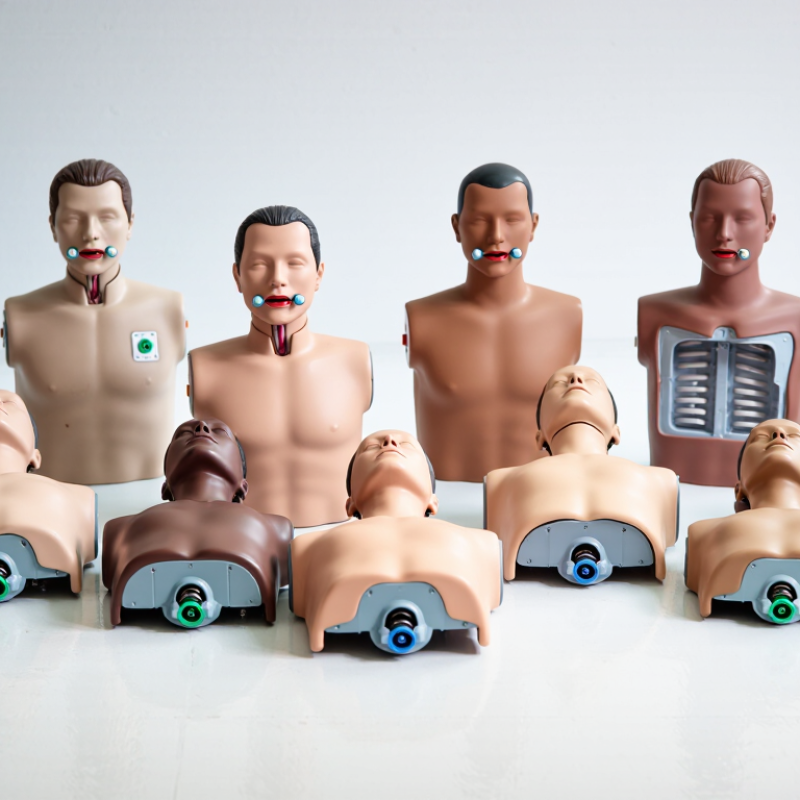
A CPR training dummy is effective when it helps learners perform correct actions, not just imitate movement. During practice, the chest should resist compression and return fully after each push. Clear anatomical landmarks help students place their hands accurately. A realistic airway should also show whether the head tilt and chin lift are working.
Useful feedback matters. Some dummies display compression depth, rate, recoil, and ventilation volume through simple indicators. This can reduce guesswork during a busy class. However, digital feedback is not enough. An instructor must still watch posture, hand position, and hesitation. No model perfectly represents every human body, which is easy to forget.
Tips: Choose a dummy with replaceable lungs, face shields, or airway parts for cleaner repeated practice. Check that the surface feels firm but not unrealistically hard. Select adult, child, or infant features based on your course goals. Test the feedback system before class. A dead battery can quietly ruin a lesson. Review cleaning instructions carefully, because rushed sanitation is a common weakness. Also inspect the chest spring and skin regularly; small defects may change compression resistance.
Choosing among the top 10 CPR training dummies depends on the learner, not just the price. The American Heart Association’s 2024 Heart Disease and Stroke Statistics Update reports over 356,000 emergency medical service-assessed out-of-hospital cardiac arrests annually in the United States. Nearly 90% are fatal. Training must therefore feel practical, repeatable, and easy to evaluate.
For schoolchildren and first-time learners, lightweight adult and child dummies with simple chest-rise movement work well. Clear visual feedback can reduce confusion. Workplace groups may need durable models, replaceable lungs, and quick cleaning between sessions. Healthcare students require more anatomical detail, including realistic compression resistance, pulse points, and ventilation responses. The 2020 American Heart Association Guidelines recommend high-quality CPR with feedback during training when available. That makes compression-depth and rate indicators valuable, especially for nervous learners.
Instructors need another kind of dummy. They may prefer connected systems that record depth, recoil, pauses, and ventilation volume. These features support measurable assessment under the 2020 European Resuscitation Council Guidelines. Still, technology can distract beginners. I have seen learners watch the screen instead of the chest. That is a weakness worth considering. A low-cost model can teach effective hand placement, while an advanced model supports formal competency checks. No dummy is perfect. The best choice matches the learner’s age, confidence, training goal, cleaning demands, and instructor capacity.
Which CPR training dummies suit different learner groups?
The suitability index counts how many of six learner groups are well served by each dummy type: home learners, first-aid students, children and teenagers, healthcare students, EMS or advanced-care trainees, and CPR instructors. Higher scores indicate broader training coverage. Adult, child, and infant models are best for age-specific practice; feedback-enabled models are useful when learners need measurable compression and ventilation guidance; full-body advanced models are designed for healthcare and EMS simulation. The index compares common training capabilities rather than company or brand performance.
Choosing among the top 10 CPR training dummies requires more than comparing prices. Start with the learning goal. A basic torso may suit classroom compressions, while a full-body model supports airway practice and recovery-position training. Check whether the dummy provides visible chest rise, realistic resistance, and clear compression depth feedback. These details help instructors correct technique immediately.
I compare each model by anatomy, feedback, cleaning, durability, and storage. The chest should recoil naturally after every compression. The face and airway should be easy to sanitize between learners. Replaceable lungs, skin, and clothing can reduce long-term costs, but replacement prices matter. Some dummies include digital reporting, which can document rate, depth, release, and interruptions. Useful data.
My first comparison mistake was treating advanced software as proof of better training. It is not. A simple model can teach strong fundamentals when an instructor observes carefully. I also examine portability. A heavy dummy may feel realistic, yet become inconvenient during outreach sessions or frequent room changes. Look for stable shoulders, reinforced joints, clear setup instructions, and reliable battery performance. Training standards and independent testing deserve attention, but product claims still need careful checking. Ask whether the feedback matches current resuscitation guidance and whether the manufacturer provides technical support. A lower-priced dummy may be practical, though weak materials can distort compressions over time. Test before buying.
Choosing among the top 10 CPR training dummies requires more than comparing prices. A useful model should provide visible or digital feedback on compression depth, rate, recoil, hand position, and ventilation. These details help instructors correct technique during practice, not after an assessment. Look for realistic chest resistance, an opening airway, and clear breathing indicators. Adult, child, and infant versions support different emergency scenarios. Replaceable face shields and lungs also improve hygiene between classes.
Standards deserve careful attention. Buyers should check whether the dummy supports current resuscitation guidance from recognized medical authorities. Product documentation should explain testing methods, feedback accuracy, cleaning procedures, and maintenance needs. A seller’s claims are not enough. Ask for evidence. Some models display impressive screens but offer weak feedback calibration. That is easy to miss during a quick demonstration.
Cost includes more than the purchase invoice. Count replacement lungs, face skins, batteries, software access, shipping, storage, and staff training. A low-cost dummy may become expensive after repeated classes. A higher-priced model may save time if it records learner results and simplifies instructor review. Durability matters too. Check joint strength, carry handles, repair support, and warranty conditions. In my experience, realistic feedback usually matters more than a polished appearance. Still, no checklist is perfect. A training center should test the dummy with real instructors before buying ten units. Five minutes of hands-on use can reveal awkward resets, unclear signals, or fragile components.
What Are the Top 10 CPR Training Dummies to Buy?
Choosing among the top ten CPR training dummies should begin with your learners’ needs. A classroom dummy should provide clear chest compression feedback and realistic resistance. Check whether it supports adult, child, or infant practice. Some models include airway positioning and visible chest rise. These details help instructors correct technique before habits become difficult to change. Durability also matters when many students share one training device. Look for replaceable lungs, face shields, and simple cleaning procedures. A product that feels realistic but takes too long to maintain may reduce practice time.
Tips: Compare feedback accuracy, cleaning costs, storage space, and replacement-part availability. Ask whether the device matches current guidance from recognized resuscitation authorities. Test the compression depth and recoil if possible. Small differences matter.
Portability can shape your choice more than expected. A lightweight dummy suits mobile classes, while a heavier model may stay stable during repeated compressions. Consider built-in indicators, app compatibility, and whether technology distracts from hands-on coaching. Digital feedback can improve consistency, but it cannot replace an experienced instructor watching posture and hand placement. I would not assume the most advanced dummy is the best one. A simpler device may work better for beginners and limited budgets. Check the training environment carefully, because noise, lighting, and available cleaning space can affect performance. Reassess the choice after several sessions; real classroom experience may reveal weaknesses that product descriptions miss.
| Rank | CPR Training Dummy Type | Recommended Learners | Body Size / Weight | Feedback and Training Features | AED Training | Portability | Typical Price Range | Best Use Case |
|---|---|---|---|---|---|---|---|---|
| 1 | Adult Full-Body Feedback Dummy | Healthcare students, instructors, workplace responders | Adult size; approximately 160–180 cm; 4–8 kg | Visual or app-based compression depth, rate, recoil, ventilation volume, and hand-position feedback | Usually included | Moderate; carrying case recommended | US$900–1,800 | Comprehensive BLS and CPR assessment |
| 2 | Adult Torso Feedback Dummy | Large classes, first-aid trainers, offices | Upper-body torso; approximately 65–90 cm; 2–5 kg | Compression depth, rate, recoil, ventilation, and performance summary | Often included or available as an option | High; compact storage | US$350–900 | Frequent group training with measurable results |
| 3 | Adult Basic Torso Dummy | Community classes, schools, introductory learners | Upper-body torso; approximately 60–85 cm; 1.5–4 kg | Mechanical clicker or indicator for compression depth; basic airway simulation | Usually optional | Very high | US$150–400 | Affordable basic CPR practice |
| 4 | Adult Full-Body Airway Management Dummy | Paramedic, nursing, and advanced medical training | Adult full body; approximately 160–180 cm; 7–15 kg | Head-tilt/chin-lift, jaw-thrust, airway obstruction, ventilation, and CPR practice | Usually included | Low to moderate | US$1,200–2,500 | Advanced airway and resuscitation scenarios |
| 5 | Child Full-Body CPR Dummy | Pediatric healthcare and emergency-response courses | Child size; approximately 90–120 cm; 3–7 kg | Child chest-compression depth, ventilation, airway positioning, and pulse-point practice | Often included | Moderate | US$700–1,500 | Pediatric CPR and rescue-breathing instruction |
| 6 | Child Torso Feedback Dummy | Schools, childcare providers, and pediatric training groups | Child torso; approximately 45–65 cm; 1.5–4 kg | Compression rate and depth feedback with replaceable face and lung-bag components | Optional or integrated | High | US$250–700 | Cost-effective pediatric practice |
| 7 | Infant Full-Body CPR Dummy | Infant-care workers, parents, pediatric responders | Infant size; approximately 50–65 cm; 1–3 kg | Two-finger or two-thumb compression practice, infant ventilation, and airway positioning | Usually optional | High | US$250–700 | Infant CPR and choking-response training |
| 8 | Infant Torso Dummy | High-volume infant CPR classes and home practice | Infant torso; approximately 35–50 cm; 0.8–2 kg | Basic compression indicator, open-airway practice, and rescue-breathing simulation | Generally not included | Very high | US$120–350 | Portable infant skills practice |
| 9 | Diverse-Body Adult CPR Dummy | Organizations seeking inclusive and realistic training | Adult full body; approximately 150–180 cm; 8–18 kg | Realistic chest resistance, compression feedback, airway management, and positioning practice | Often included | Low to moderate | US$1,000–2,400 | Scenario-based training with varied body profiles |
| 10 | Connected CPR Assessment Dummy | Professional instructors, testing centers, and simulation labs | Adult torso or full body; approximately 70–180 cm; 3–10 kg | Real-time wireless data, individual learner reports, compression metrics, ventilation analysis, and session history | Usually included | Moderate; requires device charging | US$1,000–3,000 | Documented skills assessment and instructor-led certification courses |
It should resist chest compressions and return fully after each push. Clear landmarks support accurate hand placement. Movement alone is not enough.
A realistic airway can show whether head tilt and chin lift work correctly. This makes ventilation practice more practical.
Useful feedback may show compression depth, rate, recoil, and ventilation volume. Simple indicators reduce guesswork during busy classes.
No. An instructor must still check posture, hand position, and hesitation. Screens can distract beginners. I sometimes forget that.
Lightweight adult or child dummies with simple chest-rise movement are suitable. Clear visual feedback can reduce confusion during early practice.
Durable surfaces, replaceable lungs, and quick-cleaning parts are useful. Sessions may involve many learners and repeated practice.
They may need realistic resistance, pulse points, anatomical detail, and ventilation responses. These features support more detailed skill assessment.
Test the feedback system, battery, chest spring, and skin. A dead battery can quietly ruin a lesson. Small defects can change resistance.
Choose replaceable lungs, face shields, or airway parts. Follow cleaning instructions carefully. Rushed sanitation remains a common weakness.
Match the dummy to learner age, confidence, course goals, cleaning needs, and instructor capacity. A low-cost model may teach hand placement well.
Choosing the right Cpr Training Dummies is essential for delivering effective, realistic, and engaging CPR instruction. An effective dummy should provide accurate chest compression feedback, visible chest rise during rescue breaths, durable construction, easy cleaning, and a realistic body shape that supports proper hand placement. Different learners may need different designs: basic models can suit beginners, while advanced versions with monitoring features may better support healthcare students, professional responders, and instructors.
When comparing the top 10 CPR training dummies, buyers should assess feedback systems, airway design, portability, maintenance requirements, size options, and compatibility with training software. It is also important to review applicable safety and training standards, warranty coverage, replacement-part availability, and total ownership cost rather than focusing only on the initial price. The best choice depends on class size, learning objectives, teaching environment, budget, and the level of performance data required. A carefully selected dummy can improve practice quality, instructor efficiency, learner confidence, and CPR skill retention.

Guanbang Medical