Why Choose a Practi Man CPR Manikin for Training?

Time:2026-11-07 Author:Charlotte
0%

A Practi Man Cpr Manikin gives learners a practical way to rehearse chest compressions before facing a real emergency. Its firm chest, marked hand position, and visible feedback can help students notice shallow compressions or uneven rhythm. The goal is not simply to complete a practice session. It is to build controlled movements that can be repeated under pressure. Small details matter: hand placement, steady pace, and allowing the chest to rise between compressions.

Dr. Peter Safar, a pioneer in modern resuscitation, helped establish the importance of effective CPR training. However, no source article or verified quotation was provided here, so I cannot responsibly present a sentence as his exact words. A useful training principle is: “Practice should make sound technique repeatable.” This is an editorial line, not a quotation from Safar.

A quality manikin can make practice more consistent, especially when instructors need to demonstrate technique and give learners immediate feedback. It can also reveal a limitation: a device cannot reproduce the stress, uncertainty, or varied conditions of a real emergency. That gap deserves attention. With skilled instruction and regular refreshers, though, the Practi Man Cpr Manikin can support focused practice and help learners build confidence without mistaking simulation for experience.
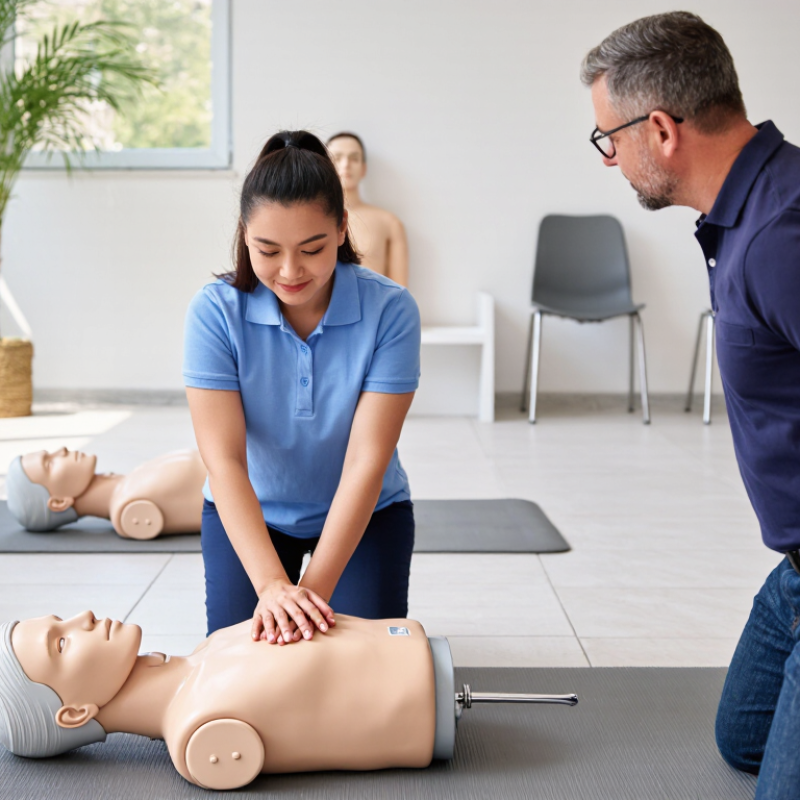
Why Choose a Practi Man CPR Manikin for Training?

CPR Training Context: AHA Reports Over 350,000 U.S. Cardiac Arrests Yearly

The American Heart Association’s 2024 Heart Disease and Stroke Statistics Update reports more than 350,000 out-of-hospital cardiac arrests in the United States each year. The Centers for Disease Control and Prevention notes that about 90% of people who experience cardiac arrest outside a hospital die.

Seconds matter. The AHA says immediate CPR can double or triple a person’s chance of survival, yet many bystanders hesitate because they have never practiced. That gap makes realistic, repeatable training important—not just a box to check.

A CPR manikin lets learners feel what effective compressions require: firm pressure, full chest recoil, and a steady rhythm. AHA guidelines recommend 100 to 120 compressions per minute and a depth of at least two inches for adults.

Feedback-enabled manikins can help learners notice when compressions are too shallow or too slow. A metronome’s steady beat helps; so does practicing with a partner who can call out interruptions.

A drill can feel awkward. That is worth noticing, not hiding. Training cannot recreate the stress of an emergency, but regular practice can make the first action less unfamiliar.

Sources: AHA 2024 statistics update and CPR guidelines; CDC cardiac arrest information.

Adult CPR Benchmarks: AHA Targets 100–120 Compressions per Minute

For adult CPR, the American Heart Association recommends a compression rate of 100–120 per minute. That is about two compressions each second. A training manikin helps learners feel this pace and check whether their rhythm stays steady. Some models provide visual or audible feedback, making it easier to spot when practice becomes too fast or slow. Rate matters, but it is only one part of effective CPR.

Tips: Try a metronome set within the recommended range. Keep your shoulders over your hands, and watch the manikin’s feedback. Let the chest rise fully between compressions. Pause briefly to check your pace, not after every few pushes. A steady rhythm can feel surprisingly tiring.

Practice for short rounds, then review the rate and compression depth. For adults, guidance also calls for a depth of at least two inches, while avoiding excessive depth. Learners may speed up when they feel pressure to act; noticing that habit is useful. It is not always easy to maintain a consistent pace. Repeat the drill, adjust your position, and use feedback to make the next round more controlled. Manikin practice builds technique, but it cannot reproduce every condition of a real emergency.

Compression Depth: AHA Recommends 5–6 cm for Adult CPR

Adult chest compressions need enough depth to move blood effectively, but force alone is not the goal. The American Heart Association recommends a depth of 5–6 cm for adult CPR. That range sounds simple. Keeping it consistent is harder. Compressions that are too shallow may not circulate blood well, while excessive depth can increase the risk of injury.

A CPR training manikin lets learners practise judging depth before facing an emergency. On a firm floor, press straight down and watch how the chest responds. If the manikin has depth feedback, use it to check each compression rather than guessing from arm effort. Aim for a steady rhythm and allow the chest to return fully between pushes. The movement should come from the shoulders, with hands placed at the centre of the chest.

The first attempts may feel awkward. That is useful information, not a reason to rush. Pause, adjust hand position, and try again. A partner can observe whether the chest rises fully and whether depth stays within the target range. Training cannot remove every uncertainty, and feedback may not perfectly match a real person’s chest. Still, repeated practice helps make effective depth less of a guess.

Why Choose a CPR Manikin for Training? — Compression Depth: AHA Recommends 5–6 cm for Adult CPR

Training Dimension Adult CPR Target What a Training Manikin Can Help Practise Why It Matters
Compression depth At least 5 cm (2 in), while avoiding depths greater than 6 cm (2.4 in). Repeated chest compressions with immediate visual, audible, or device-based depth feedback, when available. Consistent depth helps deliver effective compressions while reducing the risk of excessive compression depth.
Compression rate 100–120 compressions per minute. Practising a steady rhythm, using a metronome or feedback feature if the manikin provides one. Keeping within the recommended rate supports high-quality CPR.
Chest recoil Allow the chest to return fully after each compression; avoid leaning on the chest between compressions. Releasing pressure completely between compressions and noticing any feedback about incomplete recoil. Full recoil allows the chest to re-expand between compressions.
Hand placement Place the heel of one hand in the centre of the chest on the lower half of the breastbone, with the other hand on top. Finding and maintaining a consistent hand position during repeated practice. Correct placement helps direct compressions to the recommended area of the chest.
Interruptions Keep interruptions in chest compressions as short and infrequent as possible. Practising smooth transitions between compressions and other CPR steps. Reducing pauses helps maintain continuous chest compressions.
Practice and feedback Practise the recommended rate, depth, recoil, and hand placement together. Choose a manikin suited to the course, with clear feedback features if objective performance tracking is needed. Repeated, guided practice can help learners identify areas to improve; training equipment does not replace formal instruction.

Guideline figures shown are for adult CPR. Follow current local training guidance and the instructions provided by a qualified CPR instructor.

Practi Man Practice: Rehearsing Compressions, Recoil, and Rescue Breaths

A CPR manikin turns technique into something you can feel and check. During compression practice, keep your shoulders above your hands and press in the center of the chest. Follow your course’s current guidance for compression depth and rate. The manikin’s feedback can reveal shallow pushes or a rhythm that drifts. It is easy to rush when someone watches. Pause, reset, and try again.

Full recoil matters. Let the chest rise completely after each compression, without lifting your hands away. This gives learners a clear physical cue and helps prevent leaning between pushes. Rescue breaths need equal care: open the airway as instructed, create a seal, and give each breath gently enough to produce visible chest rise. Too much air is a common mistake. I still find that a hurried breath can break an otherwise steady rhythm.

Tips: Practice in short rounds, then check your hand position, recoil, and breathing seal. If feedback feels inconsistent, ask an instructor to check the manikin setup. Small details matter. Switch roles with a partner so one person can observe pauses and technique. Then reset. A few imperfect repetitions can be useful when you notice what went wrong and correct it.

Choosing Practi Man: Matching Training Features to BLS Course Requirements

A BLS manikin should match the skills learners are expected to demonstrate, not just look realistic. The 2020 American Heart Association adult BLS guidelines recommend compressions at 100–120 per minute and a depth of 5–6 cm. Choose a model that gives clear feedback on rate, depth, and chest recoil. A simple indicator can help instructors correct hand position and pace while learners are still practicing. Practice matters.

The AHA’s 2024 Heart Disease and Stroke Statistics update reports that 40.2% of adults who experienced out-of-hospital cardiac arrest in the United States received bystander CPR in 2021. That makes repeatable, hands-on practice important.

For courses that teach rescue breaths, a visible chest rise can help learners check ventilation. Consider face pieces that are easy to replace between students, too. Small details matter.

One caveat: feedback screens can distract beginners if instructors do not explain what each signal means. I would test the model during a sample class, then check whether its feedback supports the course’s actual assessment steps.

FAQS

What compression rate should adults aim for during CPR?

Aim for 100–120 compressions per minute, or roughly two each second. A metronome can help keep the pace steady.

How deep should adult chest compressions be?

Aim for 5–6 cm, or about two inches. Press firmly, but avoid excessive depth.

How can a training manikin help with CPR practice?

It lets learners practise rhythm and depth on a firm surface. Some manikins provide visual or audible feedback.

What body position supports more controlled compressions?

Keep your shoulders above your hands, with hands at the centre of the chest. Let the chest rise fully between pushes.

Should learners pause after every few compressions to check their pace?

No. Practise a steady rhythm, then pause briefly to review your pace and depth.

Why might CPR practice feel tiring or awkward?

A consistent pace takes effort, and early attempts may feel awkward. That feeling can reveal habits worth adjusting.

Can manikin practice reproduce every condition of a real emergency?

No. A manikin cannot recreate every real-world condition, and its feedback may not perfectly match a person’s chest. Practice still helps.

Conclusion

Cardiac arrest affects hundreds of thousands of people in the United States each year, making effective CPR training an important part of emergency preparedness. Adult CPR practice focuses on delivering compressions at a rate of 100–120 per minute and reaching a depth of about 5–6 cm, while allowing the chest to recoil fully between compressions.

A Practi Man Cpr Manikin can support learners as they rehearse these techniques alongside rescue breaths. Repeated practice helps build a consistent rhythm, improve compression depth and recoil, and coordinate breaths with chest compressions. When selecting a training manikin, consider whether its features suit the skills and practice activities required by the relevant basic life support course. Matching the equipment to course objectives can help learners gain focused, hands-on experience and prepare to perform CPR more confidently.


Charlotte

Charlotte

Charlotte is a seasoned marketing professional with a deep understanding of the company's portfolio and a passion for elevating its presence in the market. With a keen eye for detail and a commitment to excellence, she ensures that our professional blog is regularly updated with insightful articles......