 Guanbang Medical
1. Global Clinical and Commercial Necessity for Infant Heimlich Training
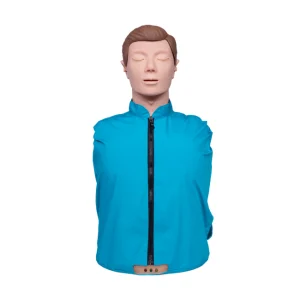
Infants (under the age of one) present distinct anatomical characteristics that make them highly susceptible to choking on food, small toys, and household items. The physiological mechanism of choking in infants differs markedly from adults. While adults can perform the standard abdominal thrust (Heimlich maneuver), infants require back blows and chest thrusts due to the vulnerability of their developing liver and spleen to internal rupture from abdominal force.
Consequently, training institutions, daycares, pediatric clinics, and emergency medical services (EMS) departments require specialized infant airway infarction models to build physical muscle memory. The market demand for pediatric BLS (Basic Life Support) manikins has scaled rapidly due to increased regulatory mandates for childcare providers and early-childhood educators. This has driven the industry to optimize the cost-to-performance ratio, allowing schools and communities to acquire high-fidelity trainers at a fraction of typical clinical simulator costs.
Bridging the Educational Gap in Underserved Communities
High-end clinical medical simulators often cost thousands of dollars, making it difficult for public schools, rural clinics, and non-profits in developing countries to offer hand-on practice. China-based manufacturers have addressed this gap. By utilizing advanced manufacturing techniques, factories can produce durable, chemically safe (TPE/silicone), and anatomically correct infant CPR and choking simulators that remain affordable. This democratization of first-aid simulators ensures that pediatric safety education is accessible regardless of institutional budget sizes.
2. China's Medical Simulation Supply Chain and Cost-Efficiency Advantages
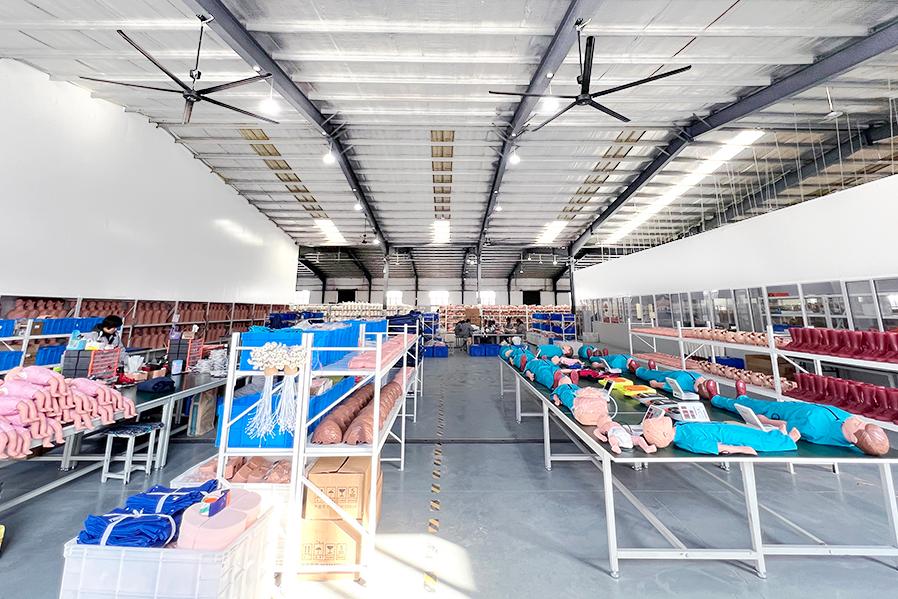
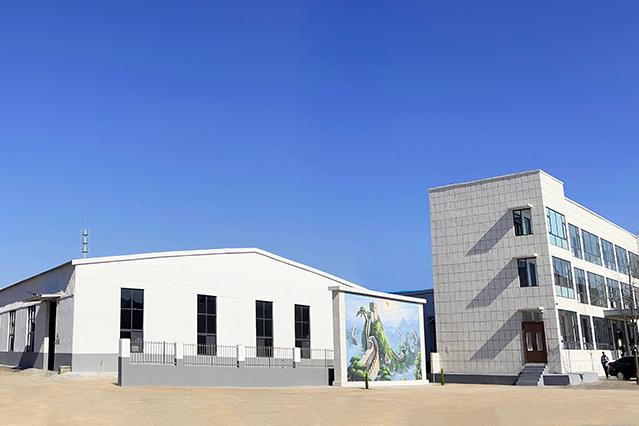
Beijing Guanbang Medical Technology Co., Ltd. exemplifies the strength of China's modern manufacturing infrastructure. Founded in 2016 in Beijing, Guanbang operates a production facility spanning 10,000 square meters. The optimization of this supply chain involves several key advantages:
- Raw Material Clustering: Direct access to medical-grade thermoplastic elastomer (TPE) and premium PVC compounds ensures low procurement costs for realistic skin materials.
- Advanced Mold Engineering: Automated CNC mold creation reduces tool-up time, allowing rapid product customization and scalability.
- Integrated R&D and Manufacturing: Guanbang has established an end-to-end business system spanning research, engineering design, raw material testing, molding, assembly, and quality assurance under one roof.
- Strategic Logistics: Based near primary logistics hubs, shipping cost-efficiency is maximized, passing direct savings onto global healthcare distributors.
3. Technical Roadmap: Anatomy, Materials, and Innovation
Designing a high-fidelity infant Heimlich simulator at a competitive cost requires balancing mechanical simplicity with anatomical realism. Below is the current technological roadmap utilized by Guanbang's engineering team, comprised of specialists holding credentials from institutions such as the Chinese Academy of Sciences and Tsinghua University.
A. Anatomical Landmark Realism
For training to be effective, students must locate precise landmarks. The infant models feature:
• The suprasternal notch and xiphoid process to guide proper chest thrust placement.
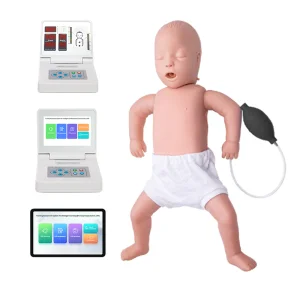
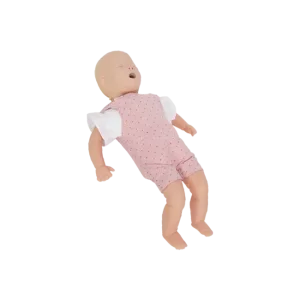
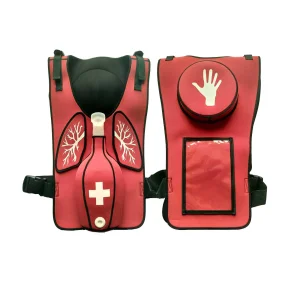
• Anatomically correct oral cavity and throat structures containing an occlusion mechanism that simulates airway blockage by a foreign object.
• Realistic neck flexibility to demonstrate proper airway opening maneuvers.
B. Advanced Polymers (TPE/PVC)
Traditional training manikins used toxic plasticizers or stiff polyurethane. Modern cost-effective factories utilize food-grade, phthalate-free thermoplastic elastomers (TPE). TPE provides a lifelike texture and flexibility that resembles infant skin, and it is highly durable, resisting discoloration and deformation over thousands of compression cycles.
C. Real-time Digital Feedback Integration
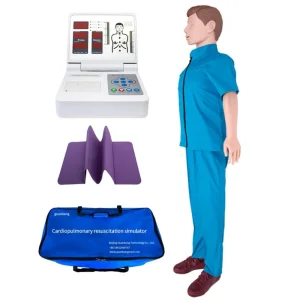
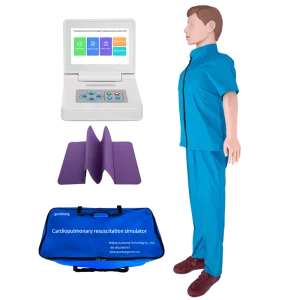
Guanbang is moving beyond passive models. The incorporation of miniature microcontrollers and Bluetooth modules allows these cheap infant manikins to stream metrics like compression depth, head-tilt angle, and ventilation pressure to an external monitor or touch screen. This gives immediate assessment capabilities during exams and helps trainees adjust their technique dynamically.
4. Localized Application Scenarios: Where the Simulator Saves Lives
The utility of infant Heimlich trainers extends across different environments, each requiring slightly different training protocols:
Scenario A: Pediatric Healthcare & Midwifery Schools
In professional training environments, educators use models to test future nurses, pediatricians, and midwives. Manikins must be robust enough to withstand daily, intensive usage. The inclusion of software-connected CPR feedback allows teachers to grade student performance accurately according to the latest clinical standards.
Scenario B: Community and Parent-Child First Aid Workshops
Guanbang frequently collaborates with civic organizations, such as the Zhengzhou Feiniao Emergency Team, to establish public experience centers. In these community events, simplicity is key. The trainers must be lightweight, easy to clean, and simple to set up, allowing parents and caretakers to gain confidence in performing back blows and chest thrusts within a short training window.
Scenario C: School Systems and Science Popularization Events
Events like the Shunyi Science Popularization Month highlight the need for scalable training models. Having a classroom set of 20+ infant simulators allows multiple students to practice simultaneously. Cost is a critical factor for educational budgets here, making factory-direct procurement of cheap, durable infant Heimlich models highly advantageous.
5. Global Certifications, Quality, and Compliance Safeguards
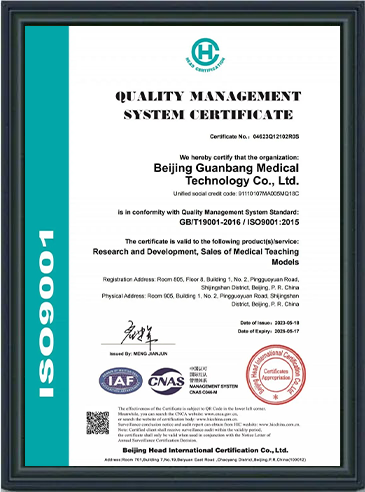
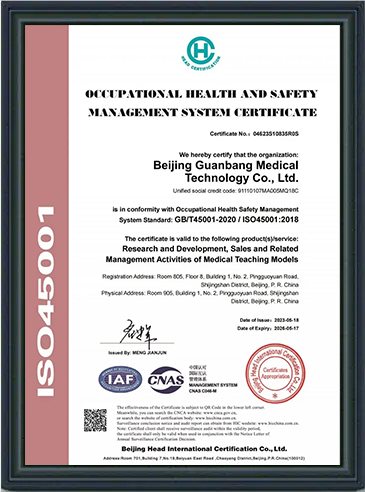
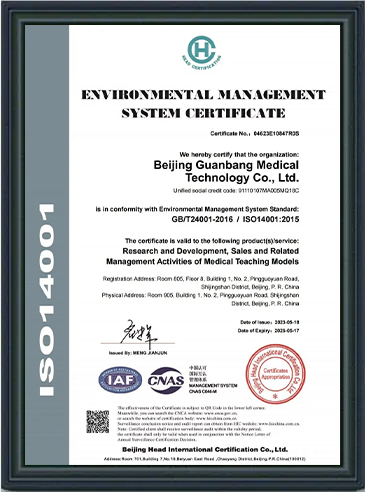
To distribute medical simulation equipment globally, manufacturers must meet international quality control standards. Guanbang operates with a comprehensive compliance framework:
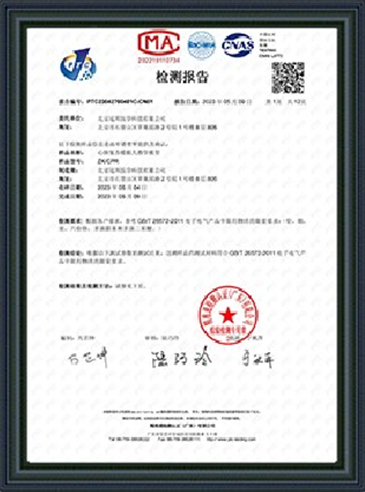
Our production facilities maintain certifications in Environmental Management, Quality Management (ISO 9001), and Occupational Health and Safety Management. Furthermore, our designs carry multiple utility model patents and software copyrights, ensuring our intellectual property is secure. These certifications provide global distributors and public buyers with the assurance that our products are safe, reliable, and legally compliant.