Explore our state-of-the-art simulators engineered for healthcare training institutions and emergency response education.
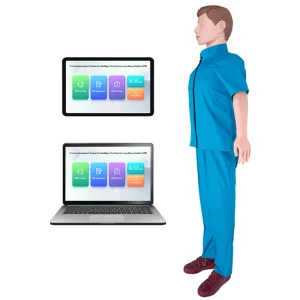
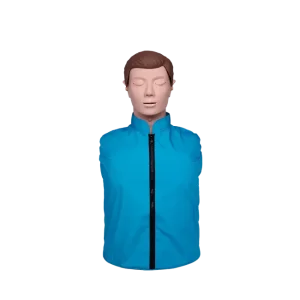
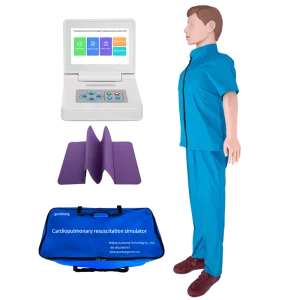
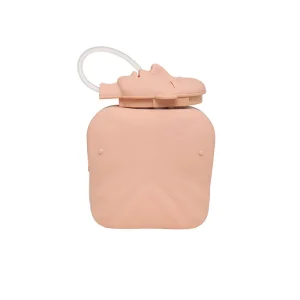
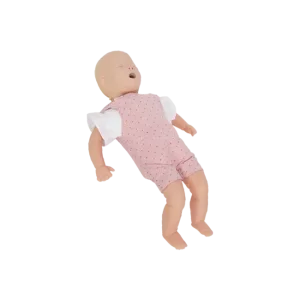
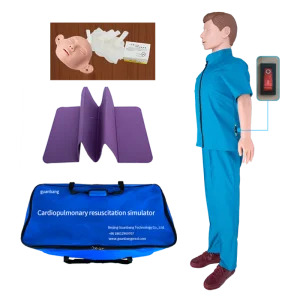
Founded in Beijing in 2016, Beijing Guanbang Medical Technology Co., Ltd. is a high-tech enterprise integrating design, R&D, advanced manufacturing, global sales, and comprehensive technical service. Operates a state-of-the-art 10,000 square meter modern production base, we maintain a complete quality chain from custom blueprint design to high-volume injection molding and final product assembly.
Our solutions serve clinics, medical schools, defense entities, municipal rescue units, and private wellness hubs worldwide. By prioritizing anatomical realism and strict guideline compliance, Guanbang ensures that emergency operators train on the most reliable platforms available.
Why specialized infant-specific simulators are critical for pediatric emergency preparedness.
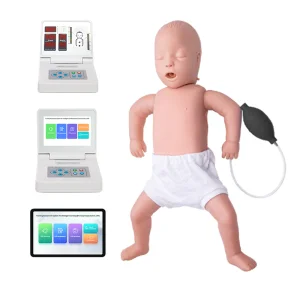
Infants possess highly flexible tracheas, larger tongues relative to the oral cavity, and an occiput that naturally flexes the neck forward when lying flat. An effective ODM simulator must model the sniffing position accurately—requiring a slight neck extension to open the airway. If overextended or underextended, our built-in sensory path registers airway obstruction, mirroring true clinical pathology.
Unlike adults, where compressions must reach at least 2 inches (5 cm), infant chest compressions must target exactly 1.5 inches (4 cm) of depth. Standard spring mechanisms are inadequate; Guanbang simulators deploy calibrated silicone-polyurethane lung bags and pressure plates that require precisely 10 to 15 lbs of force, preventing trainee muscle-memory bias towards dangerous over-compression.
Under American Heart Association (AHA) and European Resuscitation Council (ERC) standards, the compression-to-ventilation ratio for single-rescuer infant CPR is 30:2, which changes to 15:2 for two-rescuer health professionals. Our advanced software monitors this change instantly. Trainees receive real-time feedback via color-coded control screens and audio instructions, ensuring strict adherence to the correct procedural rhythms.
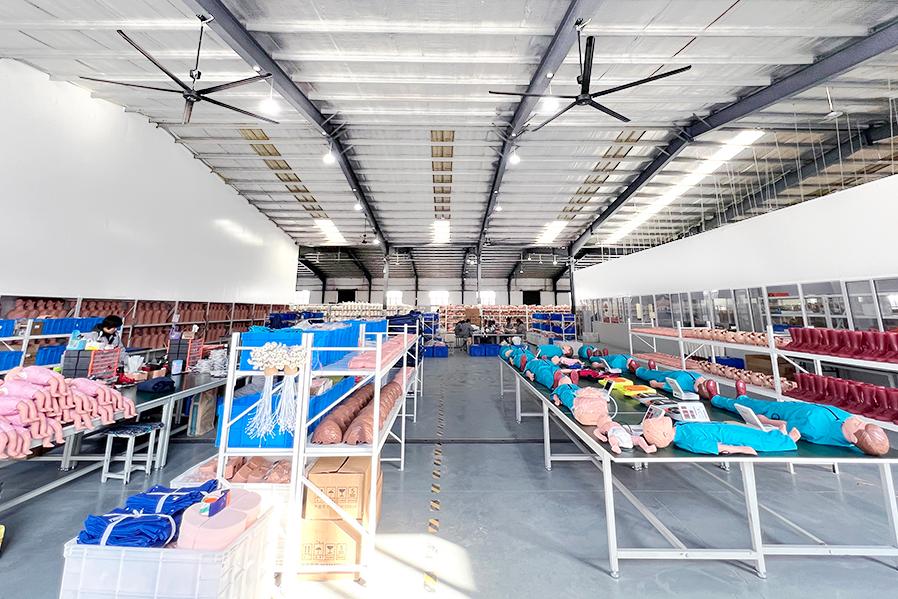
Inside the production operations of Guanbang Medical Technology in Beijing.
Our engineering core comprises researchers with postgraduate degrees from institutions like the Chinese Academy of Sciences and Tsinghua University, pioneering over 30 simulator specifications.
Using thermoplastic elastomers (TPE) and custom steel mold tooling, we produce skin structures that resist rapid deformation, maintaining elastic limits over 50,000 cycles.
Equipped with ISO 9001 (Quality), ISO 14001 (Environmental), and ISO 45001 (Occupational Health) management systems to ensure production consistency and B2B audit readiness.

The tactile realism of infant CPR simulators hinges on mimicking the delicate skin, cartilage, and bone structure of a neonate. Our proprietary material compounds offer realistic anatomical landmarks (sternum, rib cage, and substernal notch) with non-toxic, hypoallergenic compositions. This enables risk-free training environments in hospital nurseries and parent education classes worldwide.
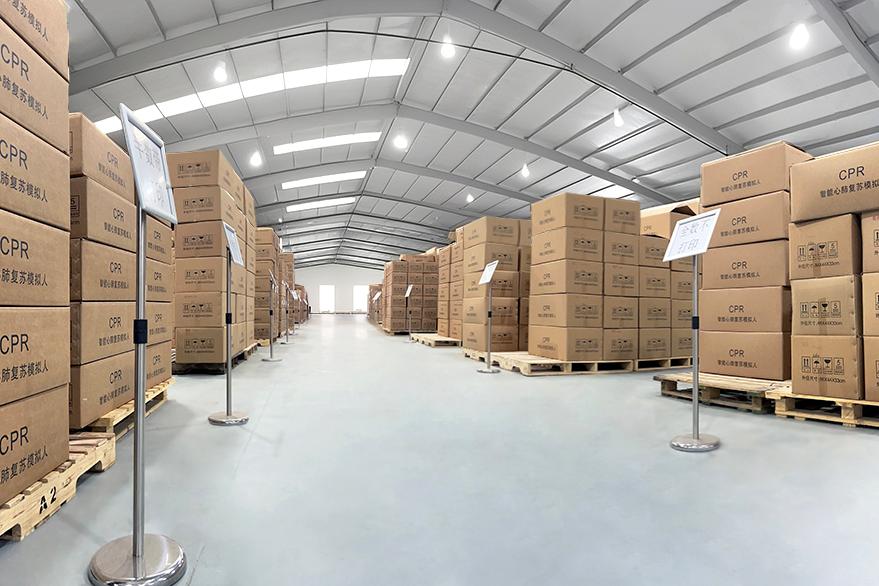
Additionally, our high-volume annual capacity of 1,000,000+ units allows Guanbang to absorb sudden order surges from international aid groups, educational institutions, and corporate safety distributors without sacrificing delivery timelines.
Adapting hardware and software to local healthcare directives across major B2B markets.
A central challenge for international distributors sourcing CPR equipment is regional variance in voice prompts, software feedback, and regulatory guidelines. Guanbang provides comprehensive localized support to eliminate these barriers.
| Feature / Standard | AHA (North America) | ERC (Europe) | Guanbang Factory Customization |
|---|---|---|---|
| Infant Compression Depth | At least 1/3 anterior-posterior chest diameter (~1.5 inches / 4 cm) | At least 1/3 anterior-posterior chest diameter (~4 cm) | Sensor ranges can be calibrated via motherboard firmware to custom tolerances. |
| Voice Prompts & UI | English (AHA terminology) | Multilingual (English, German, French, Spanish, etc.) | Pre-installed localized voice ROMs, supporting up to 16 languages. |
| Feedback Type | Real-time feedback device required for comprehensive training | Objective measurement and feedback recommended | Color touch screen with real-time waveform tracking and electronic reports. |
| Choking Protocol | Back blows & chest thrusts | Back blows & chest thrusts (ERC aligned) | Interchangeable airway models simulating obstruction and clearance. |
Our software systems, including our multi-manikin training networks, can be branded and coded in native languages. Screen displays, metrics, and grade sheets are adapted to local grading schemes (e.g., pass/fail thresholds, compression speed tolerances from 100 to 120 bpm).
We offer full private-label (OEM) branding services. This includes printing corporate logos on the simulator chassis, customizing the transport cases, and formatting manual layouts to comply with regional packaging laws (e.g., CE mark placement, WEEE directives).
Streamlined supply chain logistics and customizable design phases for large-scale enterprise contracts.
Purchasing clinical training hardware at scale requires rigorous supply chain visibility. Guanbang manages the entire production cycle, allowing distributors to purchase factory-direct and maintain healthy operating margins. Our pipeline consists of four distinct phases:
How IoT integration, sensor miniaturization, and cloud platforms are transforming clinical training.
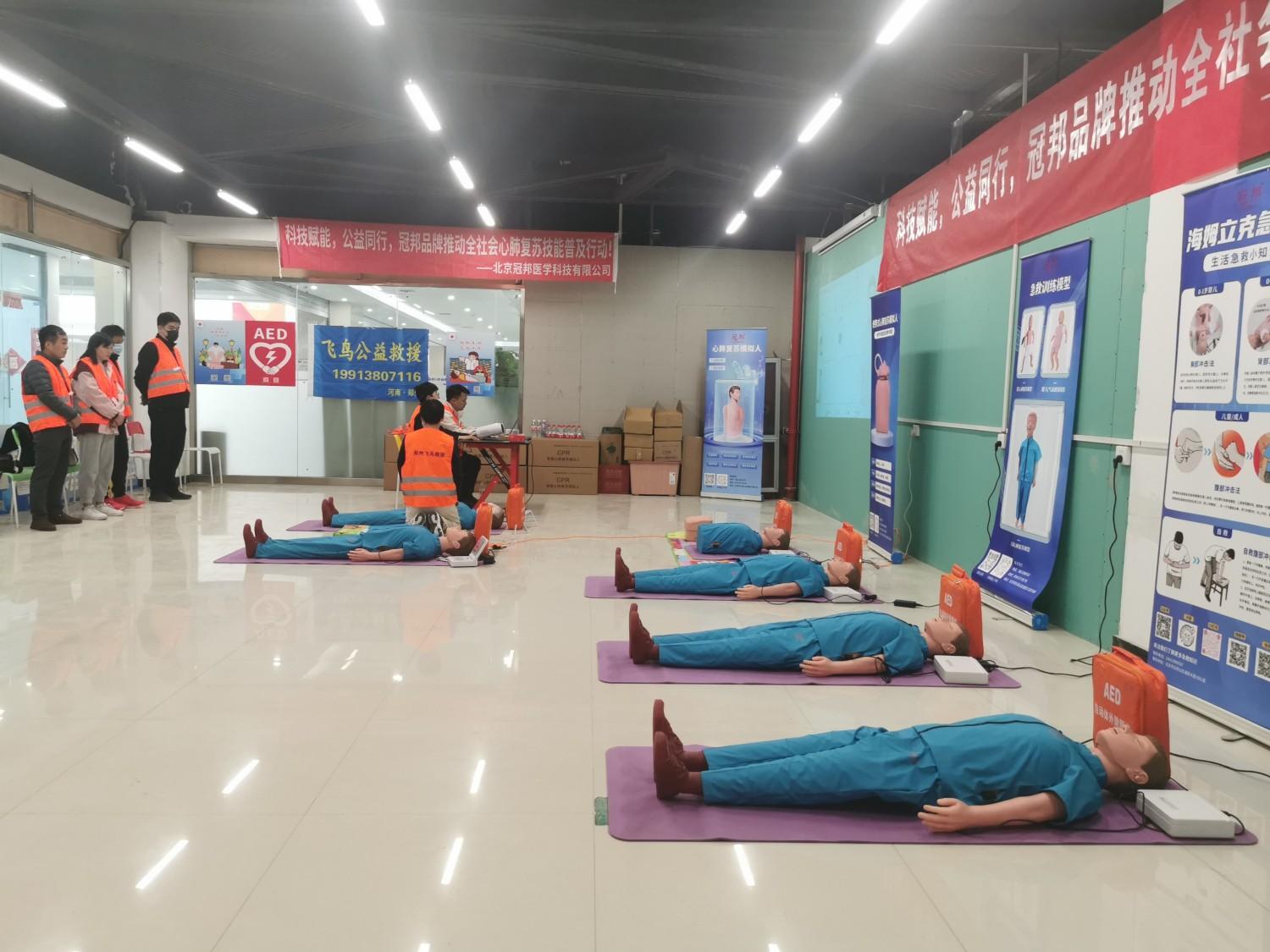
Modern training facilities are moving away from isolated simulators. Guanbang's proprietary wireless configuration allows a single instructor tablet to monitor up to 10 manikins simultaneously, tracking comparative compression scores in real time.
Rather than simple pass/fail outcomes, AI engines evaluate compression depth trends, recoil rates, and hand placement consistency, generating detailed analytical reports for trainees.
Institutions can aggregate performance data in the cloud. This allows training directors to monitor overall pass rates and verify standard compliance across multiple campuses.
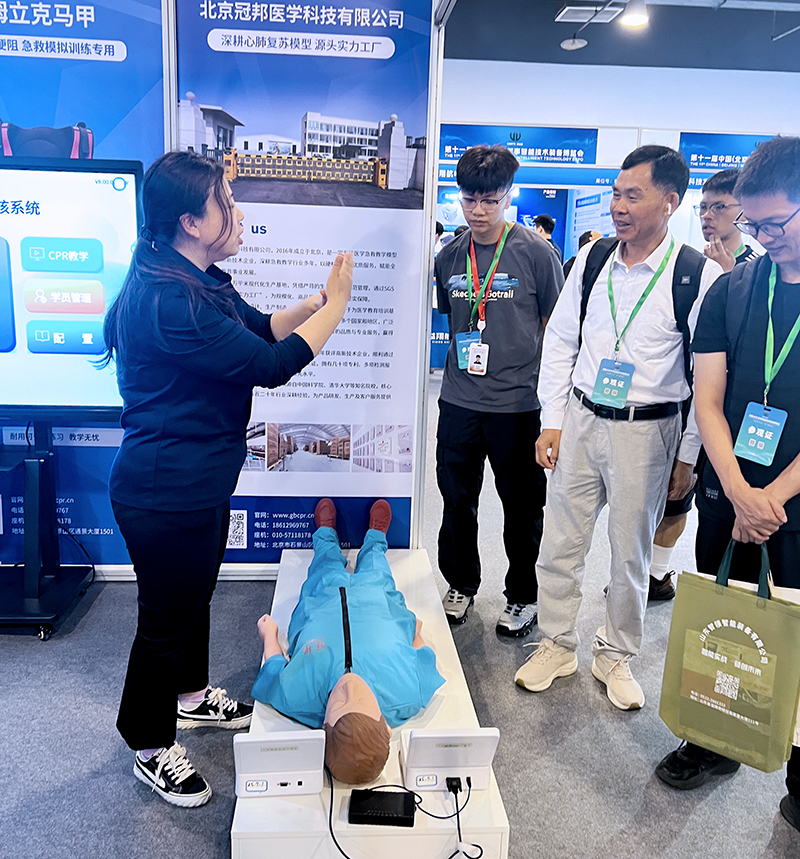
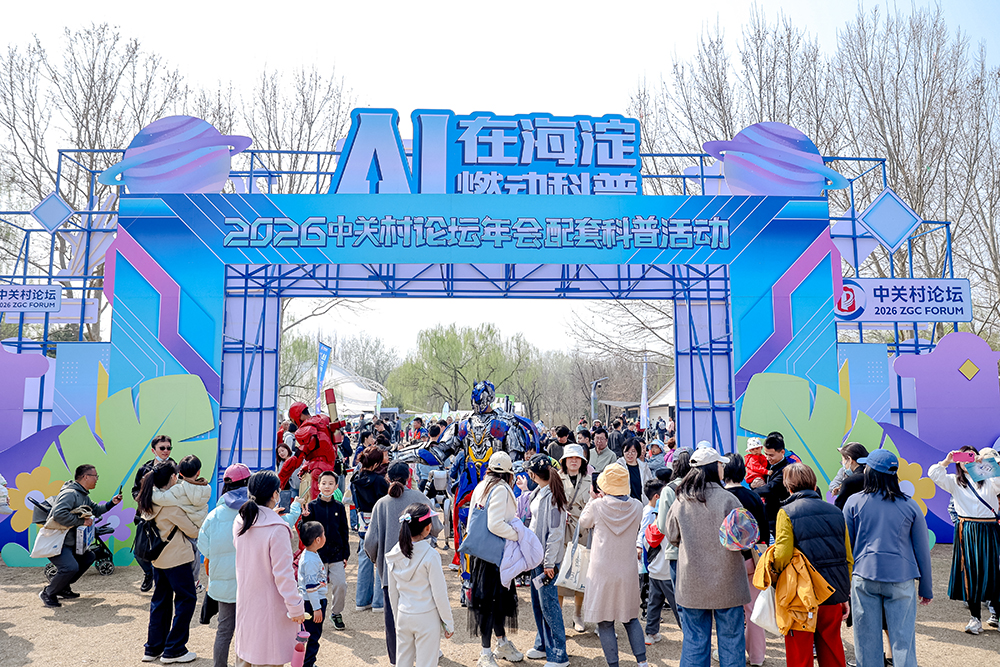
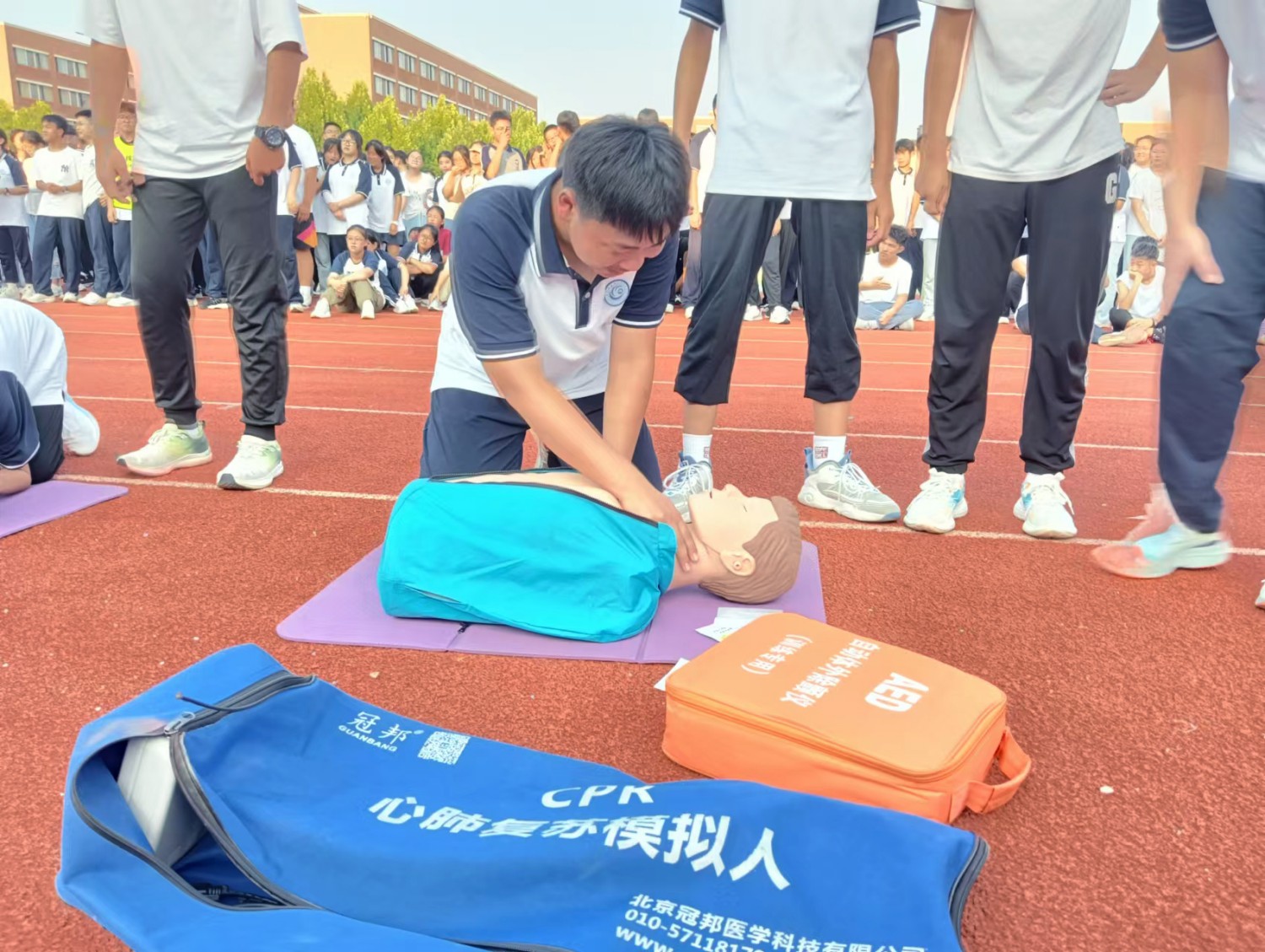
From military intelligence expositions to community safety programs.
Critical answers to questions frequently raised by B2B buyers and medical training directors.
Our technical team monitors updates from the American Heart Association (AHA) and European Resuscitation Council (ERC). The microcontrollers in our digital simulators are flashed with configurable software parameters. If a local healthcare region adjusts compression velocity, depth tolerances, or ventilation ratios, we provide tailored firmware updates.
We use medical-grade thermoplastic elastomers (TPE) and premium silicone polymers. These materials simulate human tissue flexibility and are free from phthalates and heavy metals, meeting food-grade safety standards. They are hypoallergenic, easy to clean, and durable for repeated training sessions.
Our standard MOQs for custom OEM branding begin at 50 to 100 units depending on the model's technical complexity. Thanks to our 10,000-square-meter facility, basic simulators ship within 15–20 days, whereas customized smart touch-screen orders typically require 30–40 days for electronics validation and QC testing.
Our simulators are equipped with secure Bluetooth modules that sync directly to our control software on a tablet. An instructor can track real-time compression depth, frequency, and hand placement for up to 10 trainees at once, with data displayed on a single dashboard.
Our commitment to quality, environmental safety, and professional manufacturing.
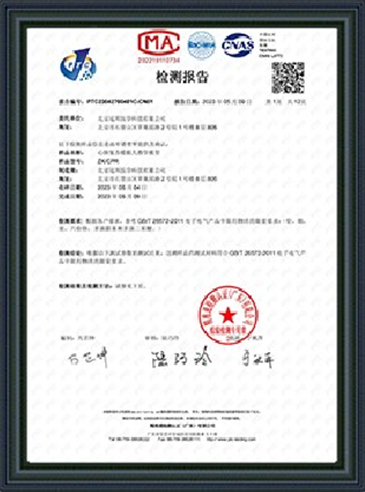
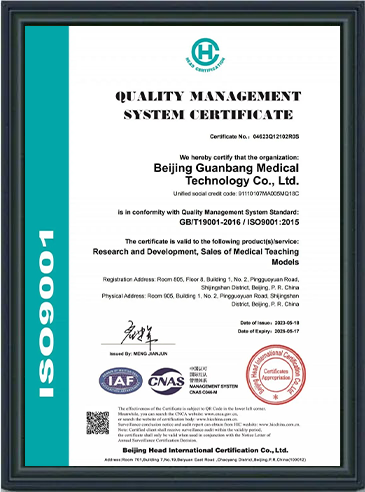
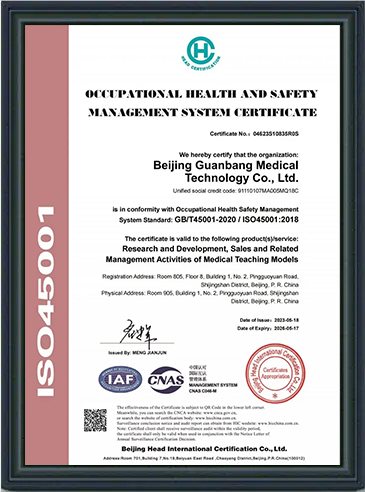
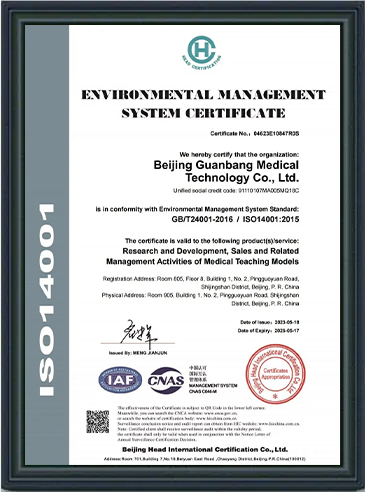
We hold complete environmental management, quality system, and occupational health certifications, ensuring compliant products for global markets.
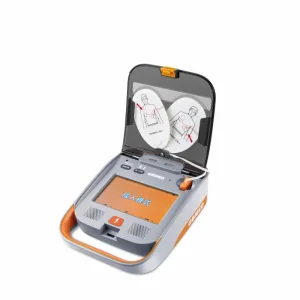
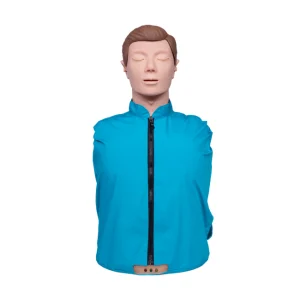
Explore our technical designs, including AED trainers, tactile airway obstruction modules, and infant-specific simulators.
 Guanbang Medical