Pre-configured simulation models optimized to conform with modern clinical guidelines and CPR instructional standards across Russia and the CIS region.
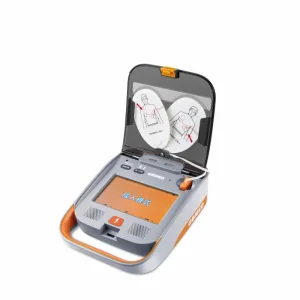
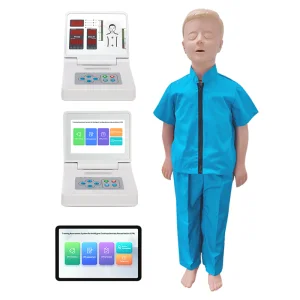
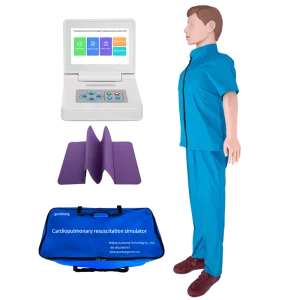
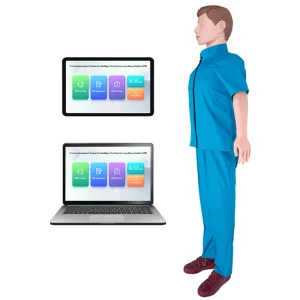
The Russian Federation has undergone a dramatic transformation in how first aid education, Cardiopulmonary Resuscitation (CPR), and Automated External Defibrillator (AED) operations are structured. Key legislative acts, including Federal Law No. 323-FZ "On the Basics of Health Protection of Citizens in the Russian Federation", have defined clear parameters for emergency medical responses. Increasingly, government bodies, municipal schools, transport authorities, and heavy industrial firms are mandating structured emergency life support training for their personnel.
Furthermore, the Russian Resuscitation Council (RRC), aligned with European and international resuscitation standards, constantly updates guidelines for Basic Life Support (BLS) and Advanced Life Support (ALS). Educational models must therefore be dynamic, enabling instructors to toggle between modern training protocols. The demand for durable, highly responsive AED training devices has reached unprecedented heights as local institutions transition from passive video-based training to interactive, hands-on clinical simulations.
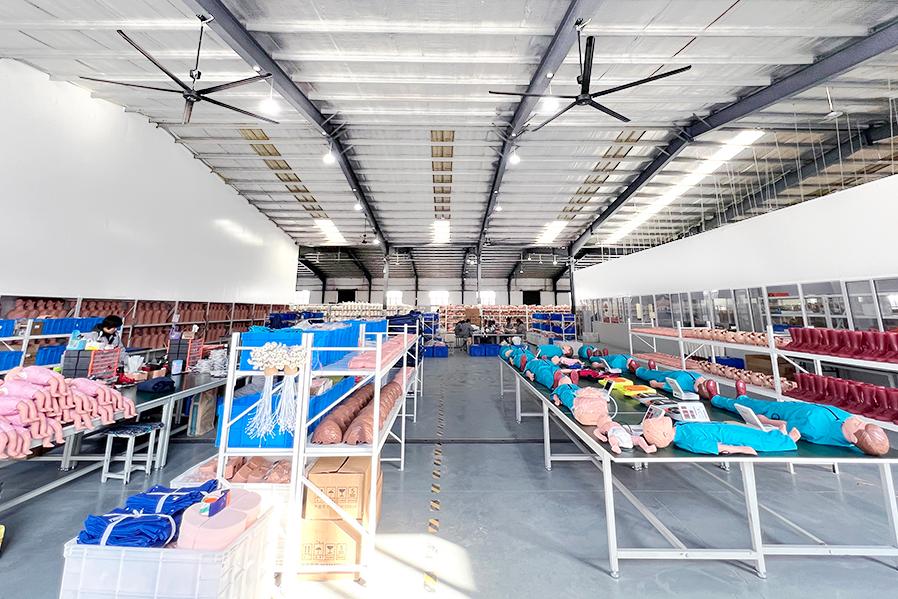
"A highly integrated AED training device must bridge the gap between theoretical knowledge and real-time physical responses. In the Russian heavy industry sector, safety drills are not just compliance checkboxes—they are mission-critical operations designed to save lives in remote Siberian oil fields and complex mining centers."
Purchasing agents and distributors across Moscow, Saint Petersburg, Novosibirsk, and Ekaterinburg evaluate AED training devices based on two critical parameters: compliance and robust mechanical execution. Since standard clinical AEDs are complex medical devices with significant regulatory and financial footprints, simulation trainers are used as the primary instructional tool to build muscle memory without active electrical hazards.
Heavy industry players—such as major oil, gas, and metallurgy conglomerates operating in harsh climatic conditions—require training models that can be stored and transported under freezing temperatures without the silicone skin splitting or the control systems losing calibration. This physical resilience, coupled with the need for clear voice prompts in natural, grammatically correct Russian, makes localized OEM/ODM manufacturing coordination a vital step in supply chain management.
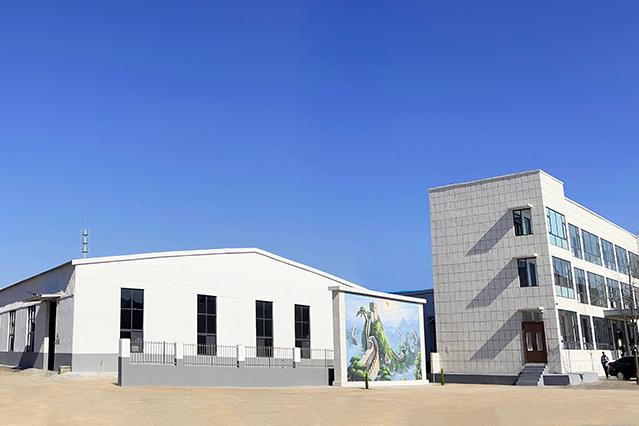
Founded in Beijing in 2016, Beijing Guanbang Medical Technology Co., Ltd. has established itself as an innovative pioneer in the medical simulation field. Across a modern 10,000 square meter production facility, the company handles the complete vertical pipeline: R&D, structure design, precision mold processing, sensor system programming, assembly, and global logistical support.
Our core engineering team comprises over 20 senior technical specialists, holding advanced degrees from prestigious institutions including the Chinese Academy of Sciences and Tsinghua University. Bolstered by more than 60 skilled production technicians, the company achieves a high annual production capacity of over 1,000,000 components and systems, ensuring short lead times and reliable supplies for international distributors.
Russian institutions face complex choices when deploying emergency education solutions. Below is a specification comparison table that outlines how Guanbang Medical's custom ODM offerings compare to general market baseline requirements for the Eurasian market.
| Feature Parameter | Russian Standard Requirements | Guanbang Medical Custom Solutions |
|---|---|---|
| Voice Prompts | Clear, natural Russian language with volume control. | Studio-recorded native Russian voiceovers, adjustable volume. |
| Pre-programmed Scenarios | Min. 5 scenarios reflecting sudden cardiac arrest variations. | 10 integrated scenarios including shockable/non-shockable rhythms. |
| Sensor Integration | Accurate pad placement detection & compression feedback. | Optical/resistive sensors mapping electrode attachment instantly. |
| Resilience & Material | Operating/storage range: -10°C to +40°C. Elastic polymer skin. | Medical-grade hyper-realistic thermoplastic elastomers (TPE). |
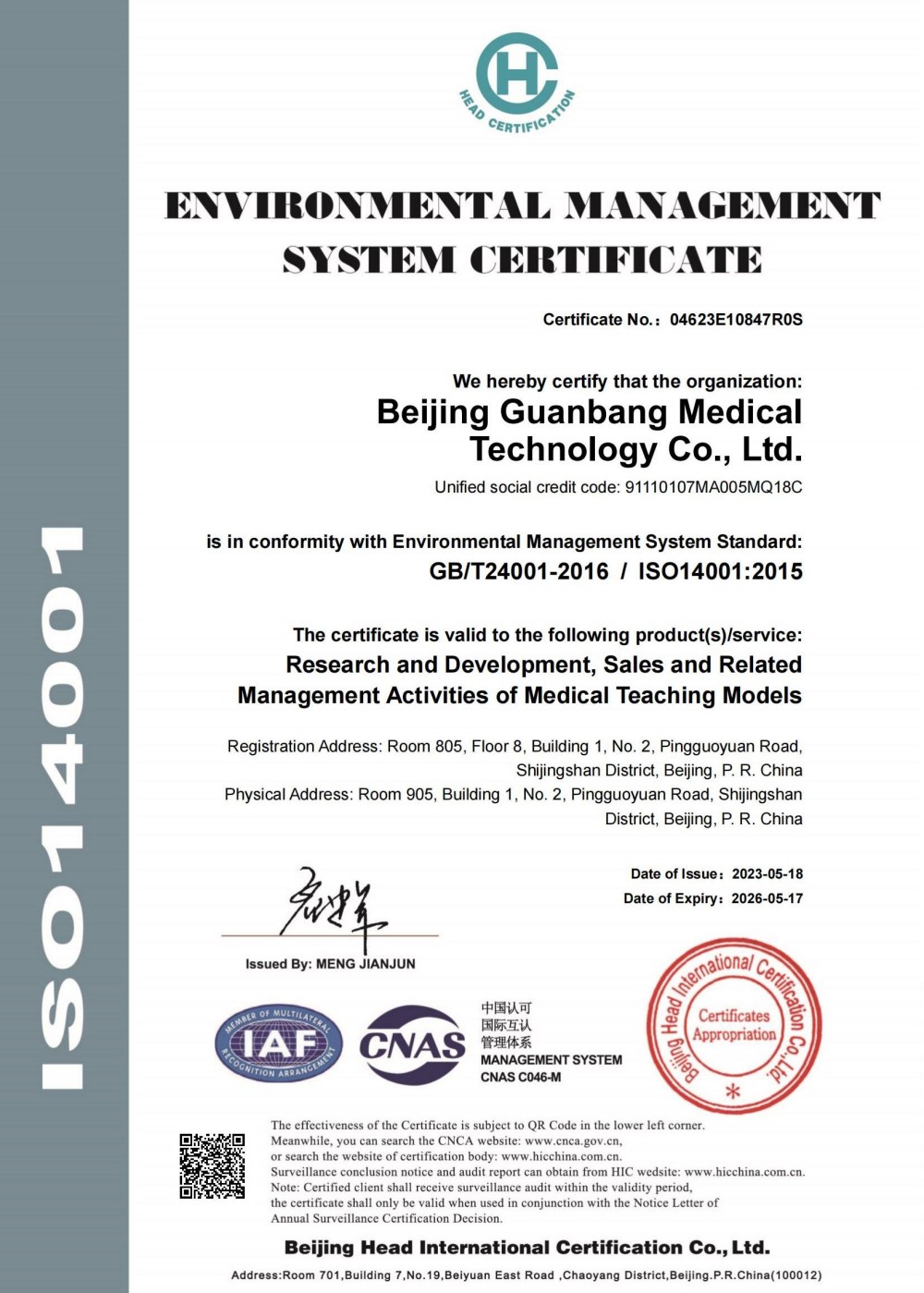
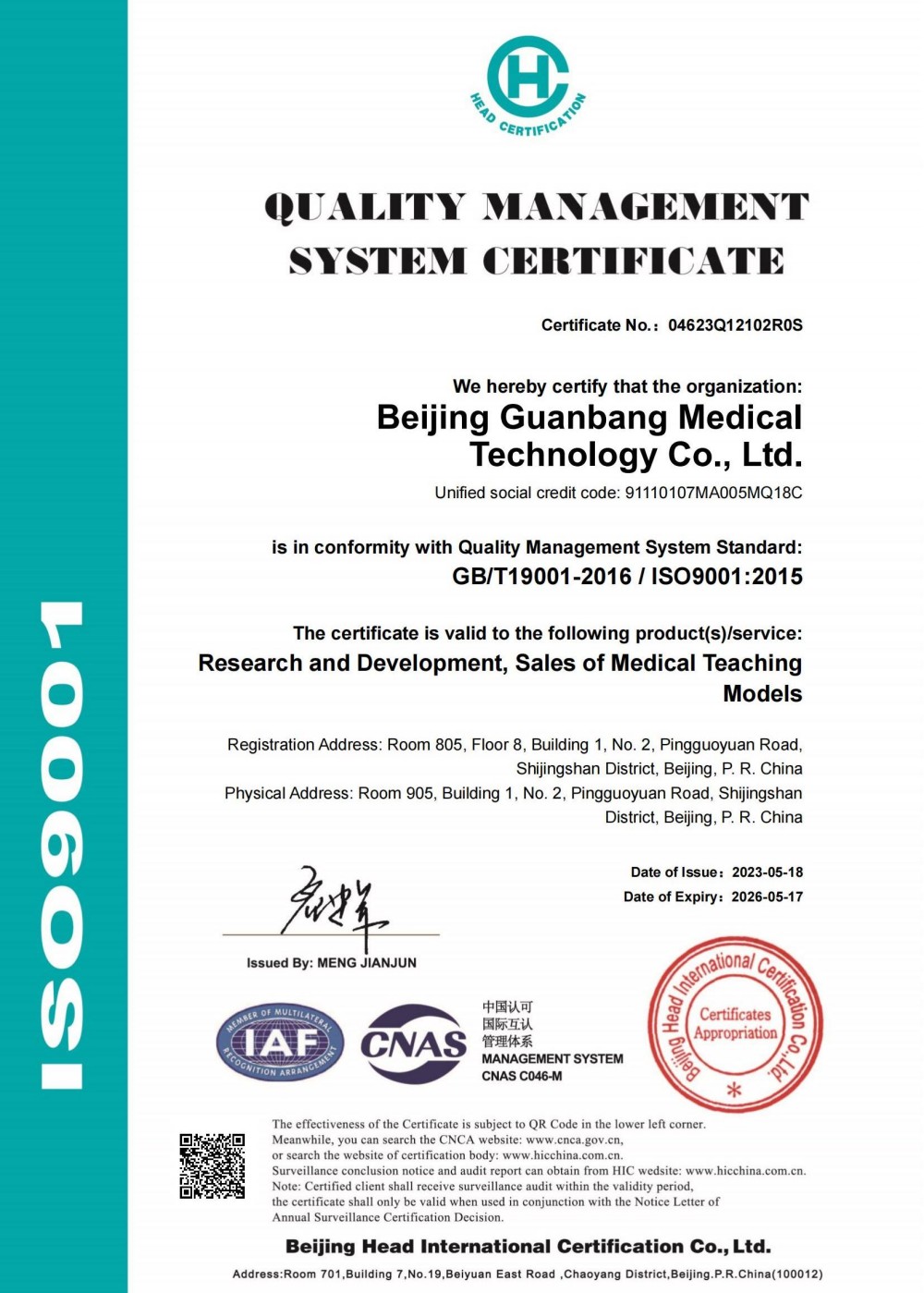
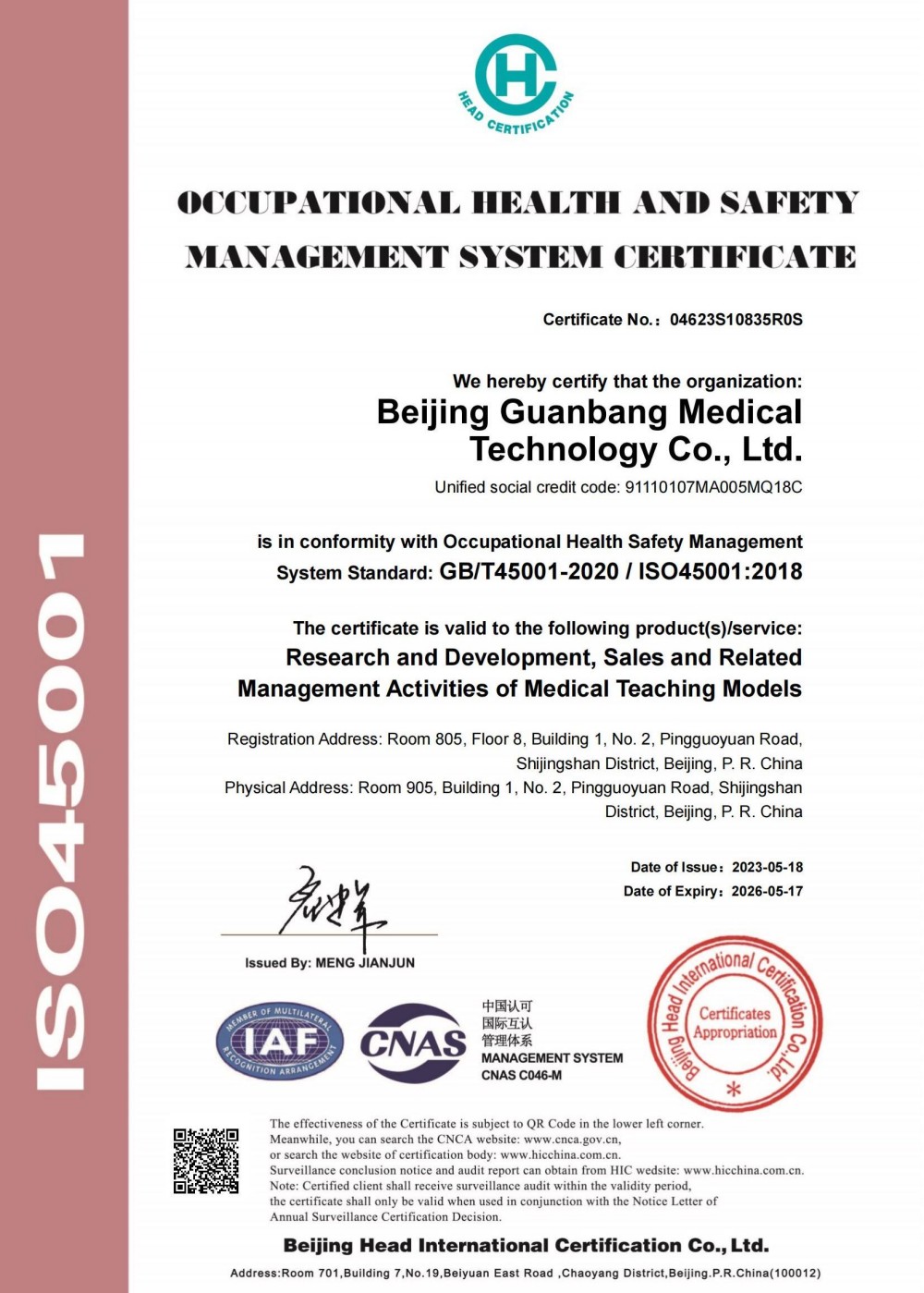
Our commitment to quality is reinforced by our extensive portfolio of intellectual properties and environmental/safety certifications. Beijing Guanbang Medical Technology operates in strict adherence to ISO 9001:2015 (Quality Management), ISO 14001:2015 (Environmental Management), and ISO 45001:2018 (Occupational Health and Safety Management) guidelines.
This systematic rigor ensures that each batch of custom AED training devices, child/infant CPR models, and Heimlich maneuver vests leaving our Beijing facilities performs reliably. With multiple utility model patents, design patents, and software copyright registrations for our feedback display modules, we provide a solid foundation for OEM partnerships in Russia, the European Union, and beyond.
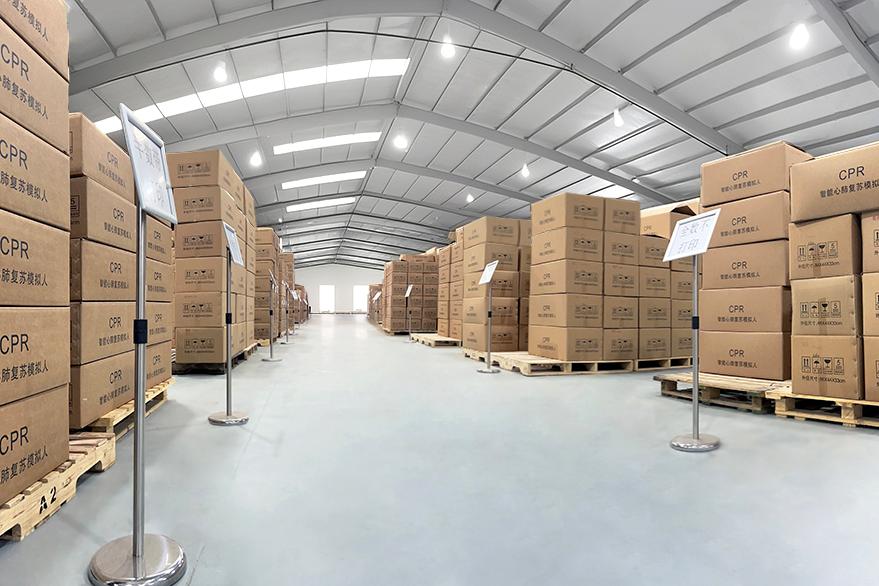
Pioneering the next generation of smart cardiopulmonary resuscitation training technologies for Eurasian safety departments.
Integrating advanced microcontrollers to calculate compression speed, depth, and chest recoil down to the millimeter, providing instantaneous voice correction.
Enabling regional training academies to compile assessment metrics from multiple simulators simultaneously, streamlining certification programs.
Developing virtual reality modules where the physical simulator responds in tandem with realistic, high-stress visual environments.
Answers to critical questions asked by Russian buyers, distributors, and safety training administrators.
Yes. All AED training machines configured for Russia and the CIS market feature clear, native Russian voice recordings. System prompts follow standard Russian first-aid terminology, ensuring trainees develop accurate operational reflexes.
Absolutely. Our simulators run on updateable firmware. Whenever the Russian Resuscitation Council (RRC) or European Resuscitation Council (ERC) updates guidelines for chest compression depth, compression rates, or breath-to-compression ratios, the units can be updated accordingly.
For bulk customized orders, design verification and mold adjustments are completed within 15–20 days. Production timelines range from 20 to 30 days depending on volume, supported by our robust 10,000㎡ factory footprint.
Our products are manufactured using customized thermoplastic elastomer (TPE) formulas. These polymers do not degrade, crack, or lose elasticity under temperatures as low as -15°C, making them suitable for transport to Siberia or remote Arctic regions.
Yes. We offer extensive custom branding services (including shell colors, structural mold updates, printed logos, and Russian instruction manual packaging) tailored to high-volume procurement programs.
Explore our diverse selection of cardiopulmonary, pediatric, and choking rescue simulators designed for professional first aid classrooms.
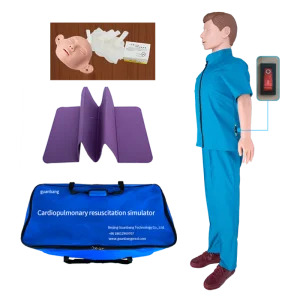
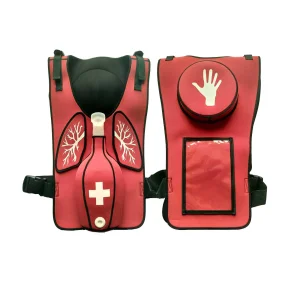
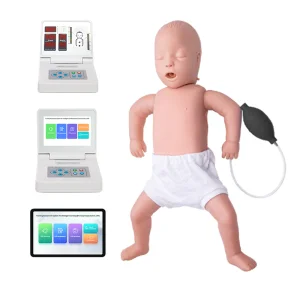
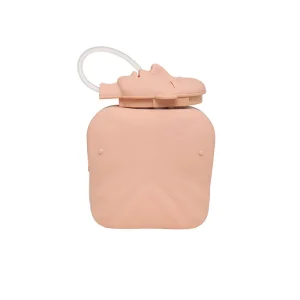
Our systems hold full accreditation certifications, proving safety compliance and technical design competence.
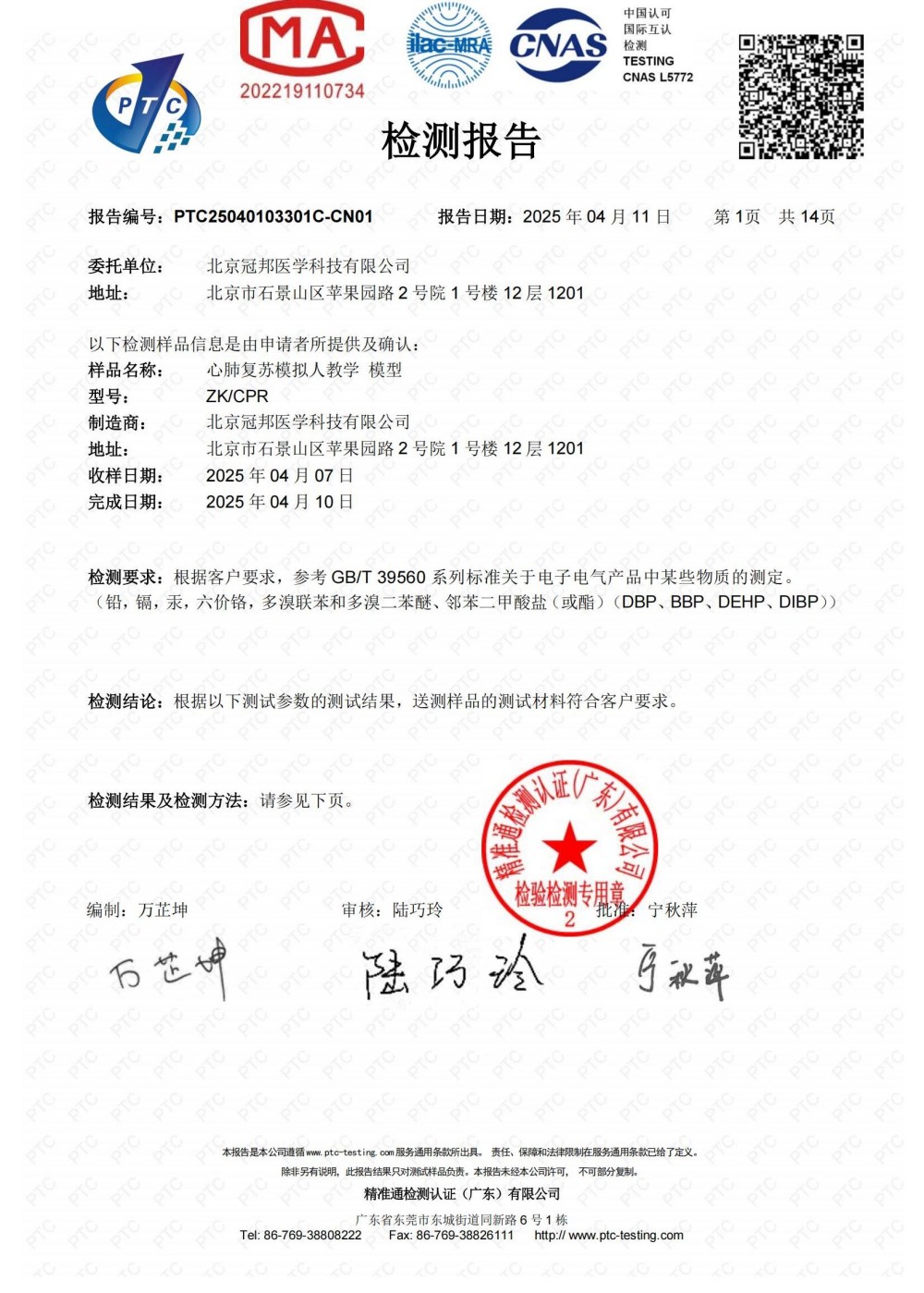
Whether you are a public school, a medical training academy, or a remote Siberian mining complex, we offer tailored emergency trainer designs built to last. Partner directly with a leading R&D manufacturer.
Send Inquiry Now Guanbang Medical