Engineered to conform with Japanese Resuscitation Council (JRC) and American Heart Association (AHA) guidelines, providing optimal simulation fidelity for academic, corporate, and municipal safety centers.
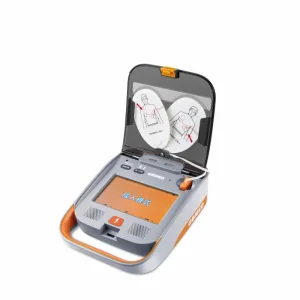
An advanced, programmable trainer designed to simulate clinical Automated External Defibrillators. Ideal for Japanese municipal disaster prevention (Bosai) drills, educational institutions, and corporate safety training programs. Pre-programmed with clear audio instructions and multiple emergency scenarios.
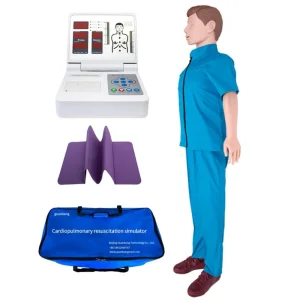
Features real-time digital monitoring for chest compression depth and ventilation volume. Designed to provide instant graphical feedback, helping Japanese healthcare facilities and training centers train responders efficiently while keeping acquisition costs highly competitive.
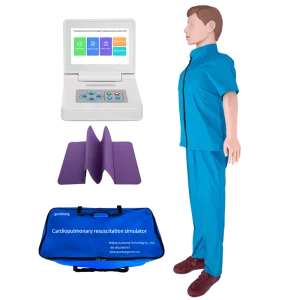
Our flagship interactive model boasting a full-color touch screen console. Delivers high-precision digital validation of resuscitation procedures. Ideal for advanced medical schools, nursing colleges, and certified emergency services throughout Japan.
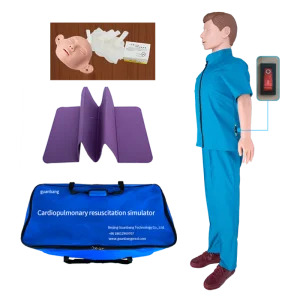
Combines physical tactical feedback with high-clarity voice prompting. Excellent for onboarding non-medical personnel in high-occupancy environments such as Japanese train stations, commercial hubs, and manufacturing facilities.
Japan represents one of the most rigorous and safety-conscious medical training markets in the world. Dominated by a rapidly aging population, where over 29% of citizens are aged 65 or older, the country's public and private sectors place unprecedented emphasis on preventative care and immediate cardiac response. The Japanese Resuscitation Council (JRC) and the Ministry of Health, Labour and Welfare (MHLW) enforce strict guidelines for first-aid competence, driving consistent demand for high-fidelity training simulators.
From industrial automotive factories in Toyota City to local community centers in Tokyo, first-aid capability is integrated into the national blueprint for disaster preparedness. However, local procurement managers face the ongoing challenge of acquiring durable, technology-advanced CPR manikins that offer modern sensor capabilities without exceeding public budgetary limits. This creates a strategic opening for high-efficiency manufacturers capable of delivering premium quality at scale.
The global paradigm is shifting rapidly from passive mechanical models to smart, interconnected training ecologies.
Resuscitation training is no longer about arbitrary chest compressions. Modern programs require sensory validation. Advanced simulators measure precise mechanical pressure, recoil velocity, and artificial lung inflation volume, displaying this data live on digital control screens or wireless applications.
Emergency training centers globally require modular setups where a single torso can transition from basic adult CPR to infant-specific airway clearance, allowing versatile simulations within compact spaces.
Compliance with international standards (AHA guidelines and local variants like ERC and JRC) is non-negotiable. Simulators must accurately reflect standard physiological resistance to train the muscle memory of rescue workers correctly.
Research in cognitive emergency response indicates that trainees using digital-control CPR simulators with real-time audio and visual feedback retain correct hand-placement and compression-depth habits up to 40% longer compared to trainees using standard non-monitored manikins. Real-time feedback bridges the gap between mechanical action and neurological retention.
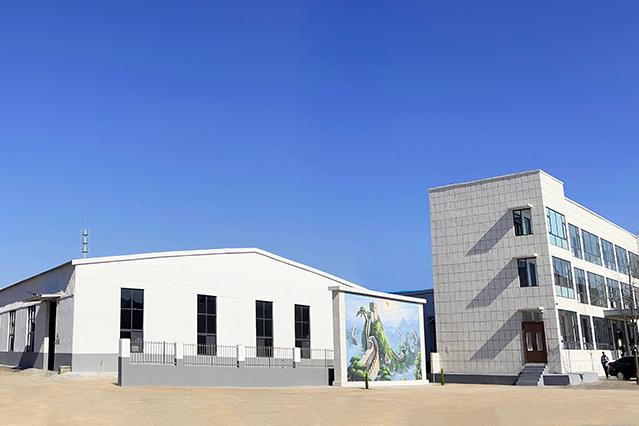
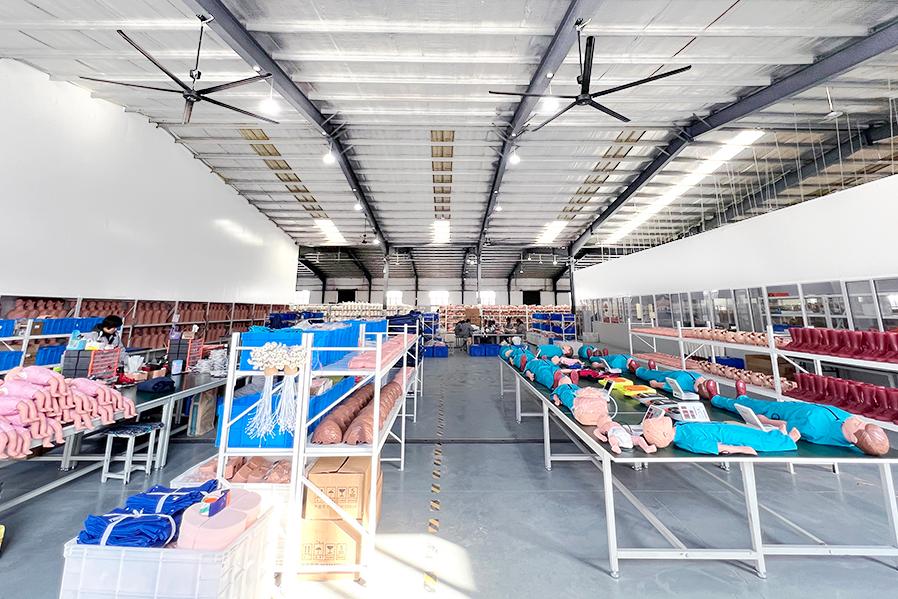
Beijing Guanbang Medical Technology Co., Ltd. operates a state-of-the-art 10,000 square meter production facility optimized for advanced medical simulator synthesis. Utilizing modern materials processing and automated mold design, we achieve unparalleled component precision while ensuring structural longevity. Our operations benefit from a hyper-integrated domestic supply chain in electronics and custom polymers, driving a manufacturing efficiency advantage that translates directly into cost savings for global procurers.
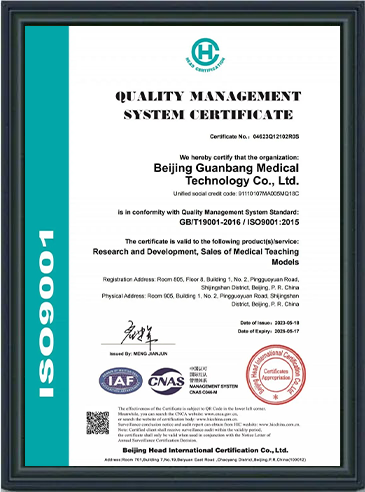
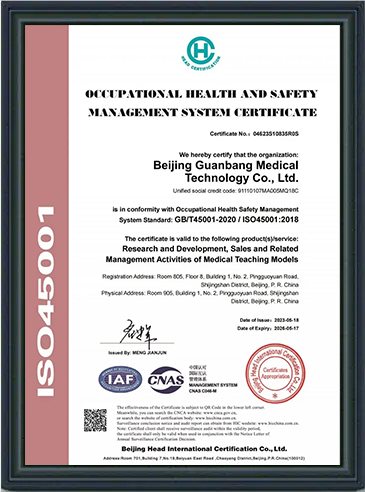
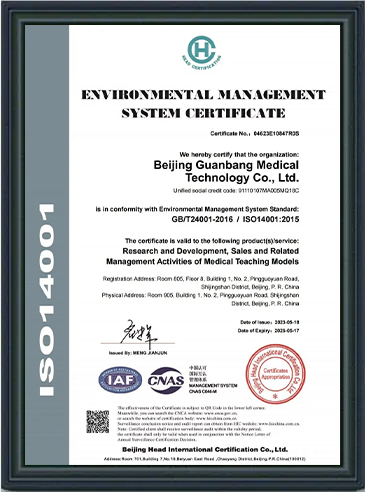
Unlike regional boutique manufacturers with limited output capacities, Guanbang's scale allows for continuous quality testing under ISO 9001, ISO 14001, and ISO 45001 paradigms. Our dedicated R&D team, featuring specialists with background credentials from prestigious institutions like the Chinese Academy of Sciences and Tsinghua University, continually updates software and sensory algorithms. This guarantees that Japanese clients receive highly optimized models tailored to local educational and linguistic preferences without the high premium associated with traditional medical simulation brands.
How Japanese institutions implement Guanbang medical simulators to enhance readiness and meet regulatory compliance.
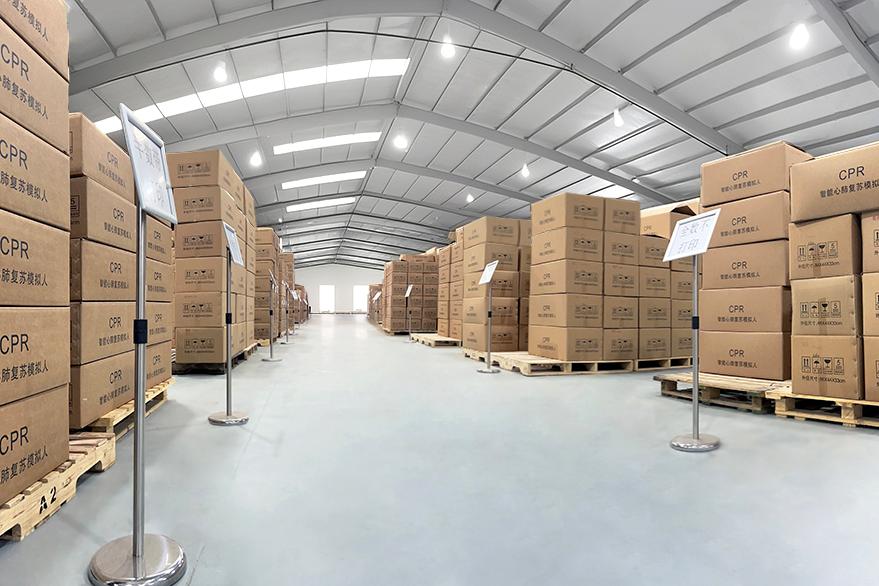
Explore our complete range of high-performance simulators designed to build confidence and muscle memory in lifesaving procedures.
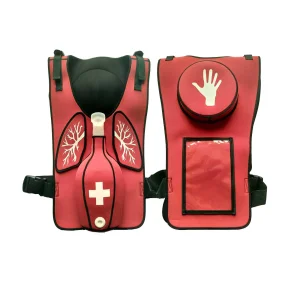
An interactive wearable vest designed to simulate foreign body airway obstruction. Widely deployed in Japanese schools, kindergartens, and eldercare facilities to teach abdominal thrusts and back slaps safely and dynamically.
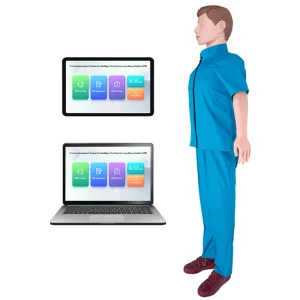
Equipped with specialized analytical software to track and log training performance. Designed for Japanese professional medical institutions, nursing academies, and search & rescue teams requiring detailed certification documentation.
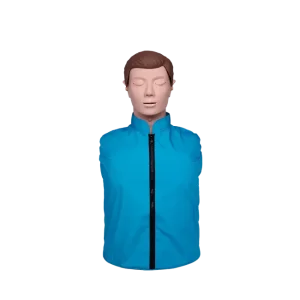
A comprehensive training suite featuring physiological replicas of infants, children, and adults. Designed to cover the entire spectrum of pediatric and geriatric rescue scenarios for versatile school and corporate health programs.
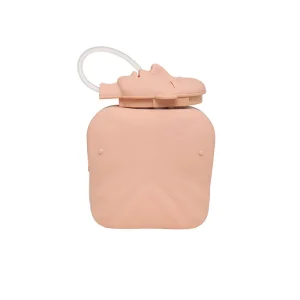
Ultra-lightweight and compact resuscitation trainer, perfect for mobile instructors and training agencies traveling across Japanese prefectures. Packs down quickly without sacrificing chest compression fidelity.
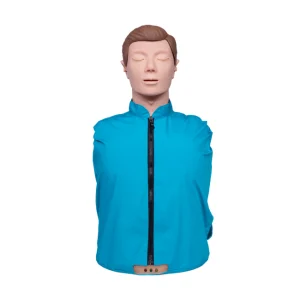
Features a smart electronic panel indicating correct hand placement and compression depth. Simplifies self-guided student practice and helps Japanese safety instructors monitor multiple trainees simultaneously.
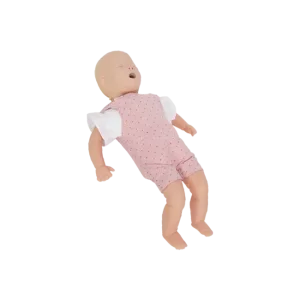
Designed specifically to teach infant choking emergency responses. Features anatomical accuracy to simulate baby airway clearance techniques, highly recommended for Japanese nursery school staff and young parents.
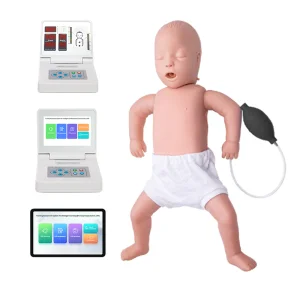
High-precision infant resuscitation simulator providing realistic chest chest compliance and airway management feedback. Vital for pediatric nursing education and neonatal emergency preparedness.
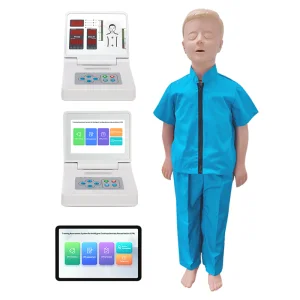
Replicates the physical dimensions and compression resistance of a young child. Essential for school nurses and pediatric emergency responders to bridge the gap between infant and adult resuscitation techniques.
Founded in Beijing in 2016, Beijing Guanbang Medical Technology Co., Ltd. is an innovative enterprise dedicated to the research, development, design, and manufacturing of high-quality simulation training models. With a modern production facility spanning approximately 10,000 square meters, our company has built a unified ecosystem covering the entire life cycle of product design, advanced mold production, and comprehensive customer support.
Our solutions have been distributed globally, serving universities, emergency rescue services, automotive facilities, and municipal defense agencies. Through continuous research, we have achieved critical advancements in mold design and high-durability polymer synthesis, ensuring our products stand at the absolute forefront of technical excellence.
We maintain rigorous certifications in quality management, environmental safety, and occupational health systems, guaranteeing exceptional safety and reliability standards for our international partners.
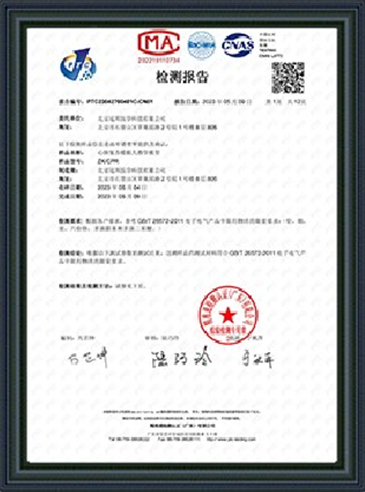
Addressing the logistical, technical, and commercial demands of bulk corporate and governmental buyers.
For international supply chain managers and public tender coordinators, acquiring educational medical simulators is a complex balance of technical compliance and logistical efficiency. Beijing Guanbang simplifies this process by providing structured compliance reporting, customized firmware localization (including Japanese language voice prompts and system displays), and optimized ocean/air freight packaging.
Our OEM/ODM capabilities encompass custom branding, modified sensor thresholds to align with regional guidelines, and scalable production curves to meet tight tender deadlines. We coordinate with global forwarders to deliver goods with clear documentation, reducing customs clearance times at major international ports such as Tokyo and Yokohama.
Get detailed technical answers regarding compliance, materials, and international shipping.
Yes. Our CPR training simulators are built to align with the standard parameters defined by both the AHA (American Heart Association) and the JRC (Japanese Resuscitation Council). They measure chest compression depth within the required 5-6 cm range and ventilation volumes of 500-600ml. Sound prompts and digital feedback metrics can be customized to local targets.
Absolutely. We specialize in ODM customization, which includes voice-chip reprogramming. We offer standard Japanese voice prompts for all audio-assisted simulators to ensure intuitive training sessions for Japanese school children, corporate staff, and emergency workers.
We use advanced thermoplastic elastomers (TPE) for the skin, and imported ABS engineering plastics for the structural interior. This formulation guarantees realistic tactile resilience, resists deterioration from disinfectants and skin oils, and withstands tens of thousands of compression cycles without structural failure.
Thanks to our high production capacity and close proximity to shipping hubs, standard orders can be processed and shipped within 7-15 business days. We provide comprehensive export documentation, commercial invoices, and origin certificates to facilitate fast customs clearance at ports like Osaka, Tokyo, and Nagoya.
 Guanbang Medical