Engineered for high-intensity clinical training programs, university educational medical wings, and corporate emergency response initiatives.
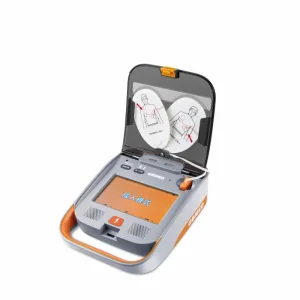
A trusted factory simulator for comprehensive BLS and ALS training, featuring custom voice instructions suited for Korean and global protocols.
Explore Model Specifications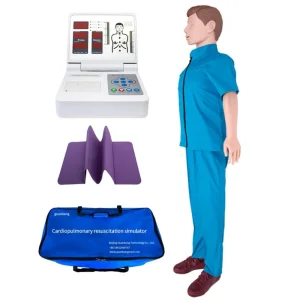
Equipped with real-time feedback controllers to monitor depth, compression frequency, and artificial airway volumes accurately.
Explore Model Specifications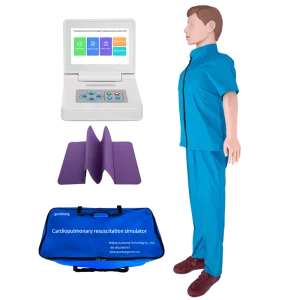
Smart touchscreen interface displaying performance data, allowing instructors to output detailed post-action analysis charts.
Explore Model Specifications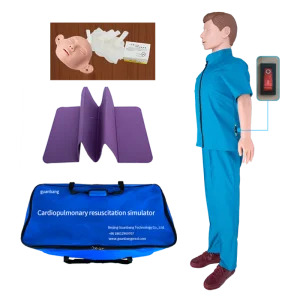
Audio guidance system simulating high-stress clinical environments to build confidence and muscle memory for rescuers.
Explore Model SpecificationsThe metropolitan Seoul area is widely recognized as one of the world's most dense medical ecosystems. Home to renowned healthcare powerhouses such as the Asan Medical Center, Samsung Medical Center, Seoul National University Hospital (SNUH), and Severance Hospital, the demand for cutting-edge simulation-based medical education has scaled exponentially. Over the past decade, South Korea's Ministry of Health and Welfare has systematically updated training requirements for clinical professionals, nursing staff, and first responders, forcing medical training facilities to phase out basic, non-feedback manikins in favor of advanced digital simulators.
Our analysis of the Seoul market reveals a significant gap between traditional clinical training models and the emerging requirements of modern digital hospitals. Advanced institutions now seek integrated CPR simulation networks that utilize local server databases or cloud services to track performance, allowing educators to review long-term progression metrics. Consequently, simulation technology must move beyond simple mechanical responses to incorporate multi-parametric sensory feedback systems, realistic physical compliance (reproducing correct chest wall recoil), and real-time audio guidance.
For international distributors, hospital procurement managers, and government buyers seeking a manufacturer in the Seoul market or importing global solutions, standard compliance is non-negotiable. Leading simulators must conform to international Resuscitation Guidelines (AHA - American Heart Association, and ERC - European Resuscitation Council), as well as national standards established by the KACPR (Korean Association of Cardiopulmonary Resuscitation).
We manufacture our simulators to meet strict international standards, ensuring that raw material selections—such as thermoplastic elastomer (TPE) skin formulations—provide realistic tactile feedback and resist degradation caused by chemical sanitizers or repetitive usage. The following matrix illustrates the primary compliance requirements we address across various global territories:
| Target Regulatory Body | Standards/Certifications | Technical Implications for Simulation Hardware |
|---|---|---|
| AHA / ERC Guidelines | 2020/2025 CPR Guidelines | Accurate depth measurements (50-60mm for adults) and feedback on full recoil. |
| KACPR (South Korea) | Korean Emergency Resuscitation Manual | Localized voice guidance in Korean and compatibility with KACPR-specific AED training cards. |
| CE Mark (European Economic Area) | EN 61000-6-1 / EN 61000-6-3 | Compliance with electromagnetic compatibility guidelines for sensors and touchscreen boards. |
| FDA / K-FDA | Class I Medical Simulator Registration | Biocompatible materials, non-toxic TPE formulation, and food-grade plastics for airway elements. |
Beijing Guanbang Medical Technology Co., Ltd., established in 2016, is a high-tech medical simulation manufacturer. Operating from a modern 10,000-square-meter facility, our workflow integrates raw material preparation, precision injection molding, sensor integration, software calibration, and quality control. We operate with an annual production capacity exceeding 1,000,000 simulator units, allowing us to supply large-scale civic projects, national military health programs, and hospital training operations worldwide.
Our R&D program benefits from collaboration with academic and technical specialists, including researchers with backgrounds from the Chinese Academy of Sciences, Tsinghua University, and the Beijing University of Technology. This combination of clinical insight and engineering expertise has earned us international quality management certifications (ISO 9001:2015), environmental management systems (ISO 14001:2015), and occupational health certifications (ISO 45001:2018).
To manufacture medical simulators that withstand thousands of chest compressions without experiencing structural wear, we focus on material science and structural engineering. The selection of materials for skin and internal structural elements determines a manikin's overall reliability and tactile realism.
1. Material Formulation (TPE & Silicones): We avoid cheap PVC-based components, which can become brittle and discolor over time. Instead, our manikins utilize high-molecular-weight thermoplastic elastomers (TPEs). These materials replicate the elasticity, skin fold compliance, and anatomical landmarks of real human skin, and are resistant to tears and oil transfers.
2. Advanced Mechanical Deflection Assemblies: The internal resistance systems of our chest cavities are engineered using calibrated spring steel modules. This maintains consistent resistance over more than 500,000 compression cycles, preventing the loss of compliance common in low-end models.
3. Sensor Integration and Connectivity: Our high-end touch screen and software-enabled models employ high-resolution optical and magnetic hall-effect sensors. These track compression depth with sub-millimeter precision, detect chest wall recoil, and monitor ventilation volume and speed to help prevent air entry into the stomach.
Our product line provides customized solutions across multiple sectors in the global emergency simulation market:
Our comprehensive selection of specialized first-aid models, pediatric simulators, and choking response systems designed for the global market.
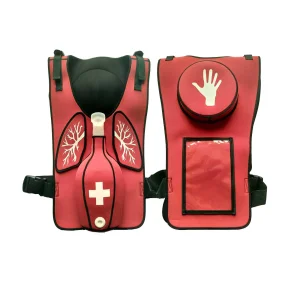
Wearable trainer designed for airway obstruction practice, helping users master back blows and abdominal thrusts.
Explore Model Specifications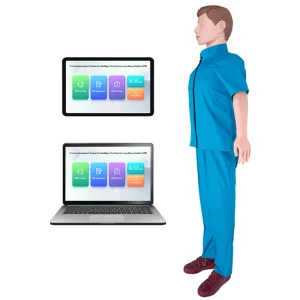
Software-enabled analysis package that generates real-time performance curves for depth and recoil metrics.
Explore Model Specifications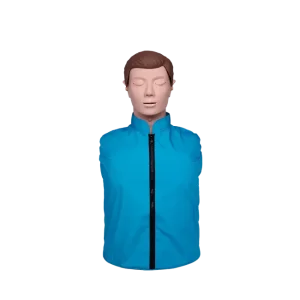
Complete age-spectrum training set designed for pediatric wards and family emergency care instructors.
Explore Model Specifications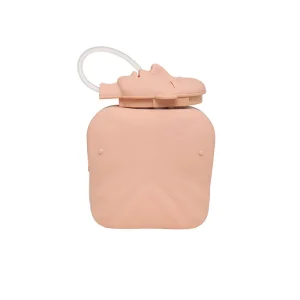
Lightweight, rugged design equipped with basic electronics, ideal for mobile training clinics and first responders.
Explore Model Specifications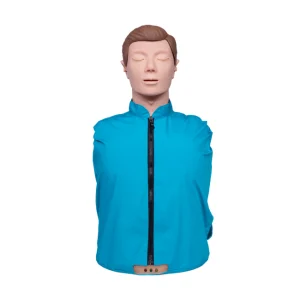
Uses immediate light-up panels to signal correct hand placement and compression depth during training sessions.
Explore Model Specifications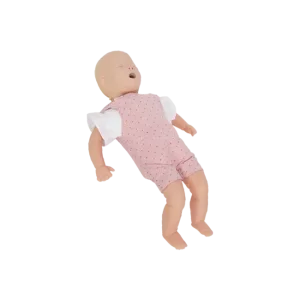
Realistic infant manikin designed for practicing foreign body clearance techniques in pediatric emergency care.
Explore Model Specifications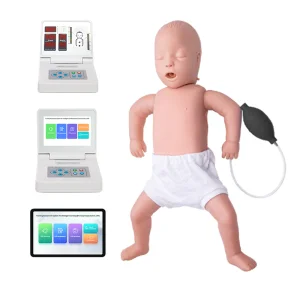
Designed with realistic chest compliance for infant CPR, featuring optional voice feedback module configurations.
Explore Model Specifications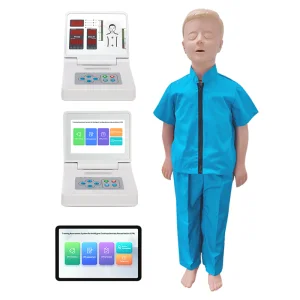
A child-sized simulator engineered for training programs in elementary schools, daycare centers, and youth organizations.
Explore Model SpecificationsExpert insights on regulatory compliance, material longevity, and shipping logistics.
 Guanbang Medical