Functional Overview
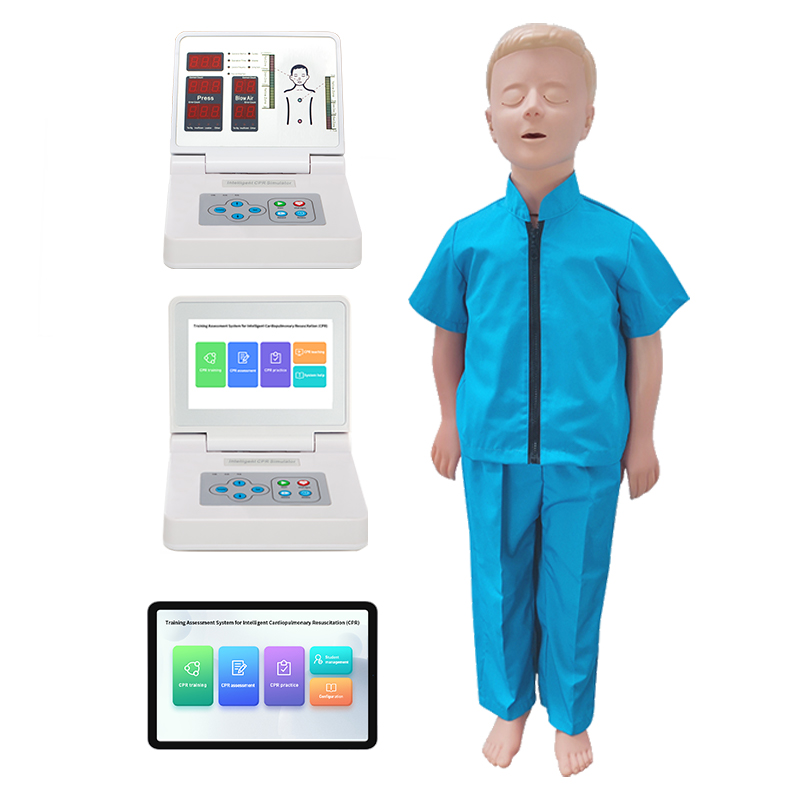
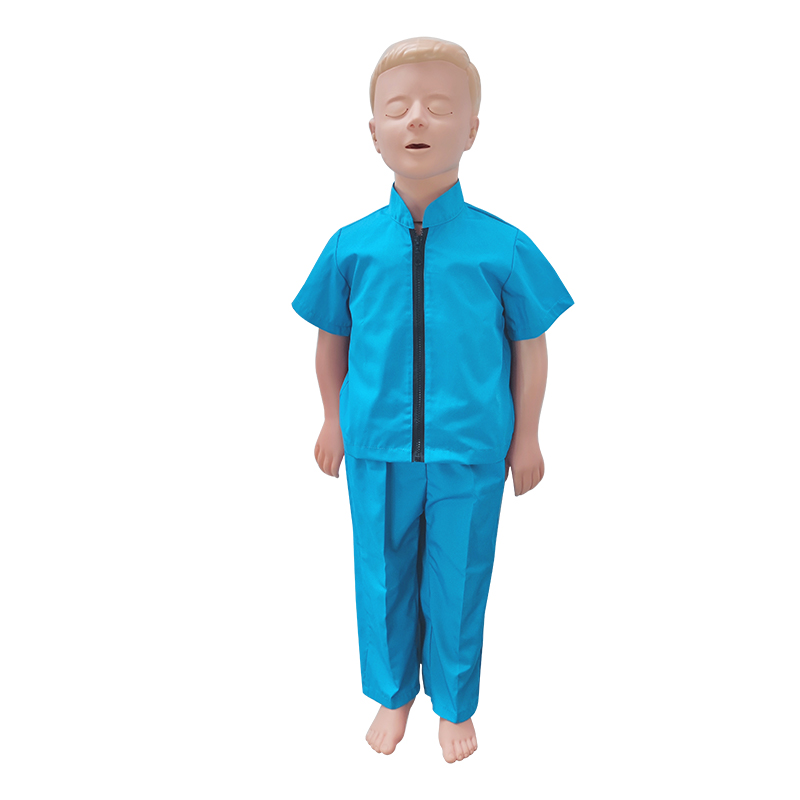
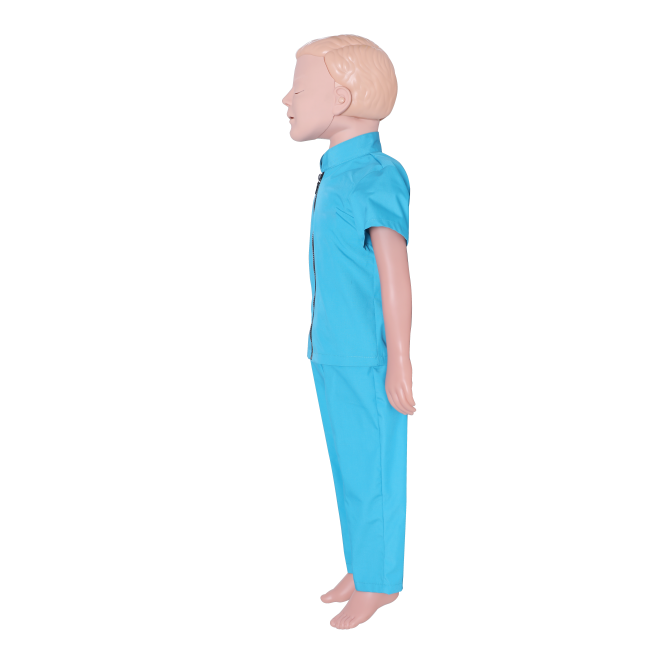
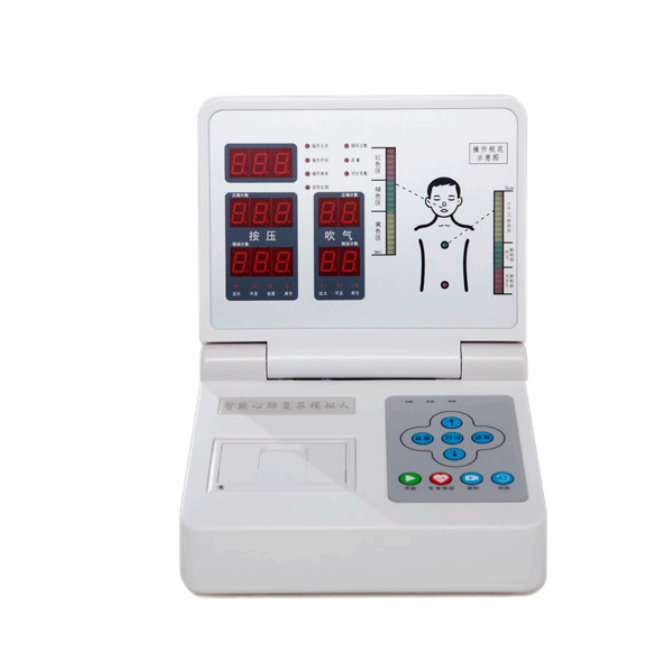
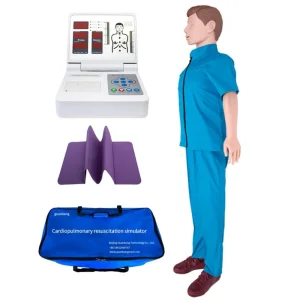
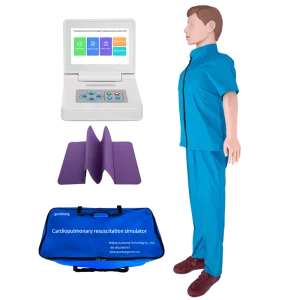
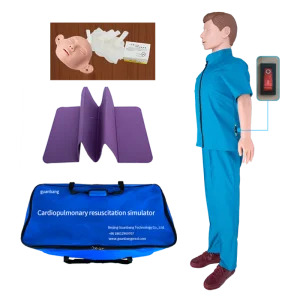
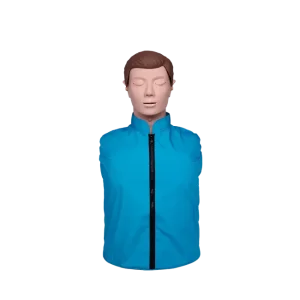
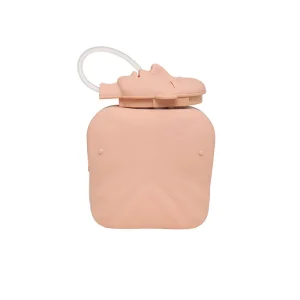
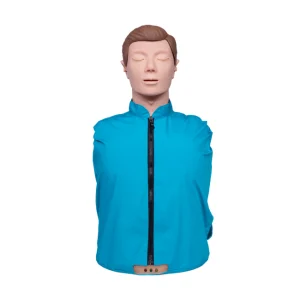
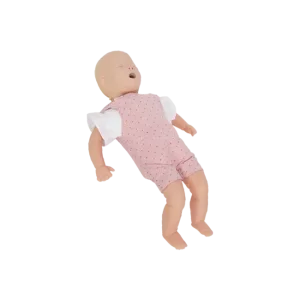
This children's model features realistic anatomical form with clearly defined landmarks for easy operational positioning. The knee joint is movable, and the facial skin, neck skin, chest skin, and other components utilize environmentally-friendly thermoplastic elastomer composite materials.
-
Head & Neck Rotation
Realistic head and neck assembly with lateral head rotation capability. The head rotates horizontally 180 degrees to facilitate simulation of oral foreign body clearance.
-
Chest Compression Training
Correct compression depth: 5 cm | Compression rate: 100–120 per minute | Location: lower half of the sternum. Provides realistic tactile feedback with full chest recoil.
-
Airway Opening
Airway opening procedures can be performed through correct head tilt–chin lift maneuvers, simulating real-life emergency scenarios.
-
Artificial Ventilation Practice
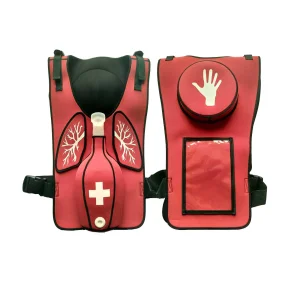
Supports mouth-to-mouth or bag-mask ventilator methods. Visible chest rise occurs during effective ventilations for instant feedback confirmation.
-
Pupil Observation
Eyelids can be opened for pupil inspection. One pupil is dilated (simulating a critical life-threatening condition) and one is small (indicating successful resuscitation).
Frequently Asked Questions
Q
What is the correct chest compression depth for this children's CPR model?
The correct compression depth for this children's CPR training model is 5 cm. The model provides realistic tactile feedback to help trainees identify the proper compression depth, along with full chest recoil after each compression.
Q
What compression rate should be maintained during CPR training on this model?
The recommended compression rate is 100 to 120 compressions per minute, consistent with current international CPR guidelines. This rate helps trainees develop proper rhythm and muscle memory for real emergency situations.
Q
What ventilation methods are supported by this training model?
This model supports both mouth-to-mouth and bag-mask ventilator methods. During effective ventilation, the chest visibly rises, giving trainees immediate visual confirmation that the airway is open and ventilation is successful.
Q
How does the model simulate different patient conditions using pupil response?
The model's eyelids can be opened to reveal two different pupil states: one dilated pupil simulates a critical or life-threatening condition, while one small/constricted pupil indicates a successful resuscitation response — helping trainees understand clinical assessment indicators.
Q
How is the airway opened on this children's CPR manikin?
The airway is opened using the standard head tilt–chin lift technique. The model's realistic head and neck assembly supports lateral rotation up to 180 degrees, allowing trainees to also practice oral foreign body clearance procedures.
Q
What materials are used in the construction of this CPR training model?
The facial skin, neck skin, chest skin, and other surface components are made from environmentally-friendly thermoplastic elastomer (TPE) composite materials. These materials provide a realistic feel that closely mimics human tissue, enhancing the overall training experience while being safe and durable.
 Guanbang Medical