 Guanbang Medical
1 / 5
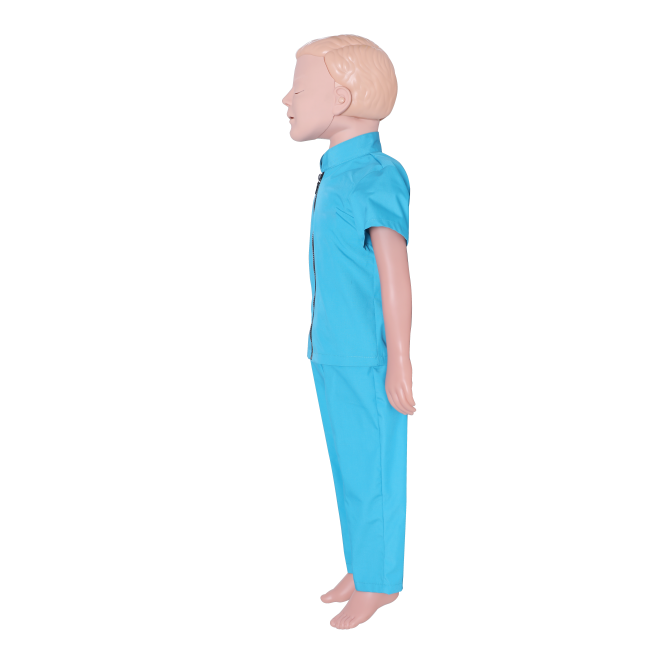
Features a realistic head and neck assembly with lateral head rotation capability. The head can rotate horizontally 180 degrees to facilitate simulation of oral foreign body clearance.
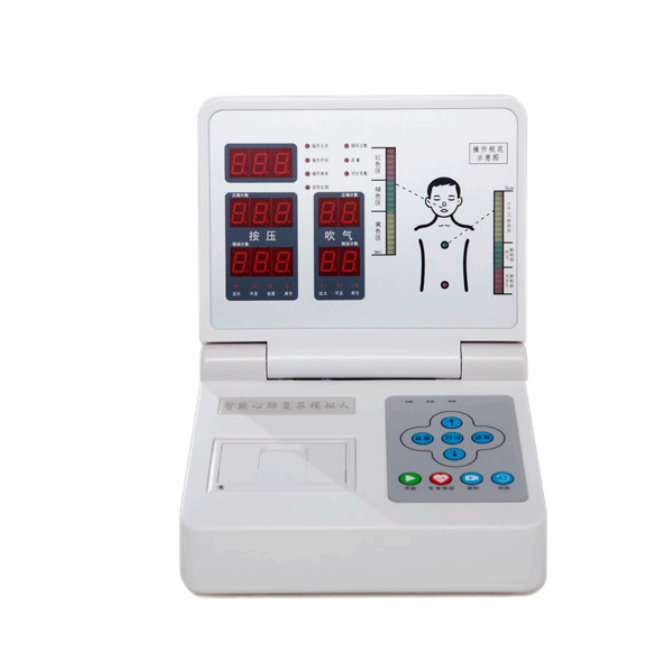
Supports correct compression depth of 5 cm, compression rate of 100–120 compressions per minute, at the lower half of the sternum. Provides realistic tactile feedback with full chest recoil.
Airway opening procedures can be performed through correct head tilt–chin lift maneuvers.
Can be conducted through mouth-to-mouth or bag-mask ventilator methods, with visible chest rise during effective ventilations.
Eyelids can be opened for pupil observation — one pupil dilated (simulating a critical life-threatening condition) and one pupil small (indicating successful resuscitation).
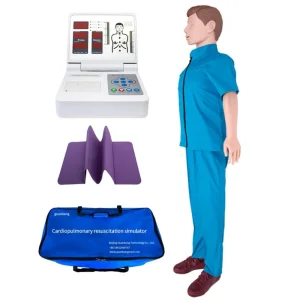
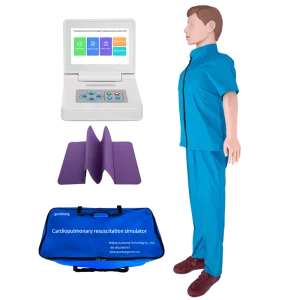
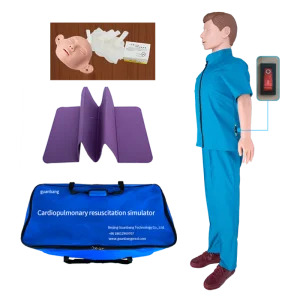
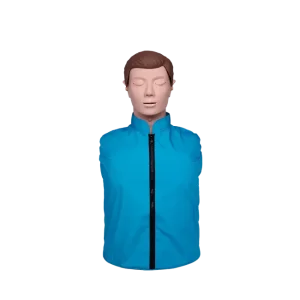
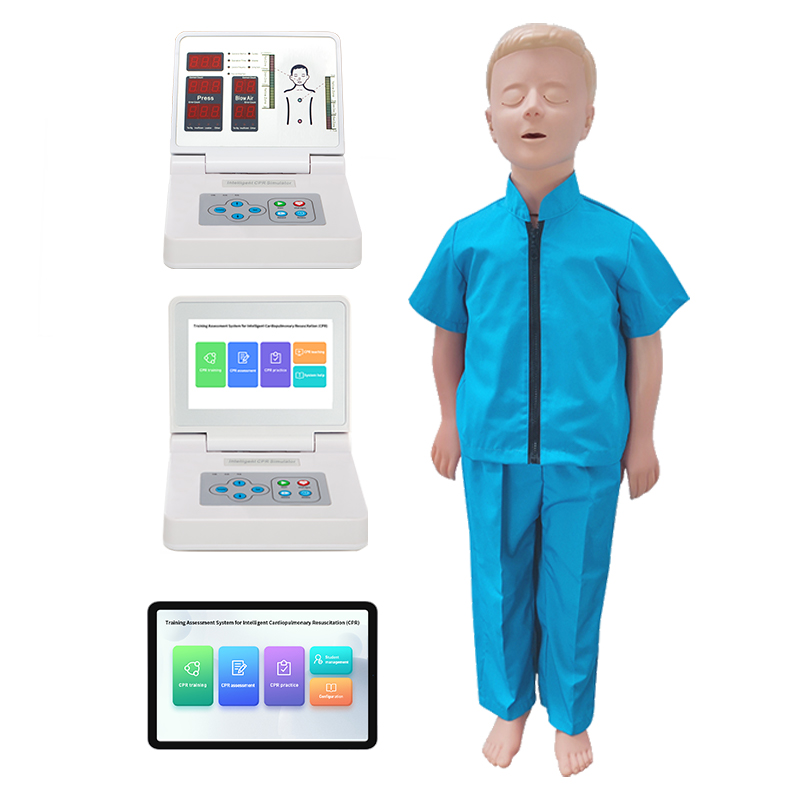
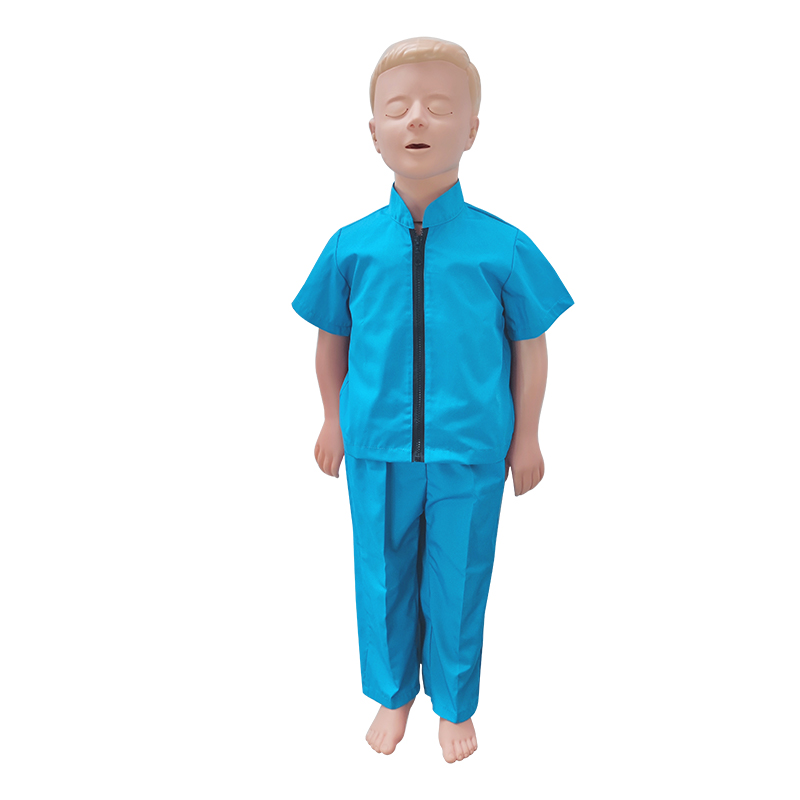
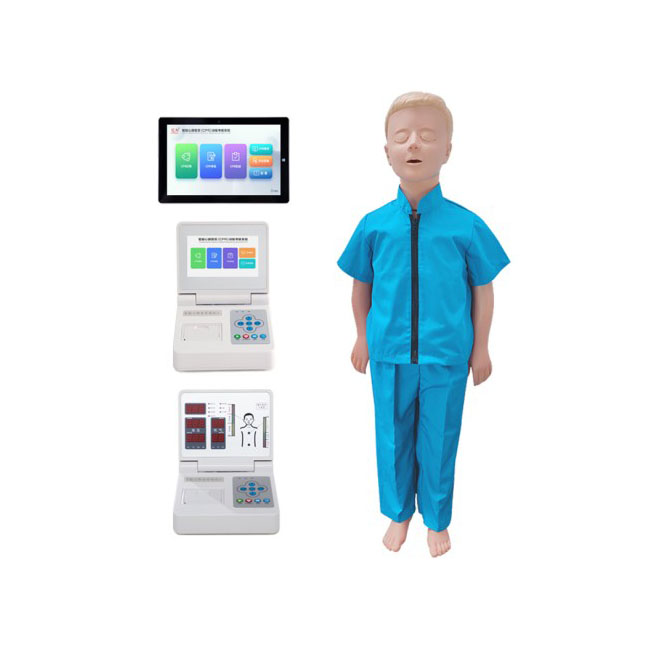
This children's CPR manikin is specifically designed to simulate a child patient for pediatric resuscitation training. It is suitable for healthcare professionals, first responders, and educators who need to practice CPR and airway management techniques applicable to child patients.
The correct chest compression depth is 5 cm, and the compression rate should be maintained at 100 to 120 compressions per minute. Compressions should be performed at the lower half of the sternum, consistent with current pediatric CPR guidelines.
Yes. The model supports both mouth-to-mouth and bag-mask ventilator methods for artificial ventilation practice. Effective ventilation can be visually confirmed by observing the visible chest rise during each rescue breath.
The model includes openable eyelids with two differentiated pupils: one dilated pupil simulates a critical, life-threatening condition, while one constricted (small) pupil represents a successful resuscitation outcome. This feature helps trainees learn clinical assessment as part of a complete CPR scenario.
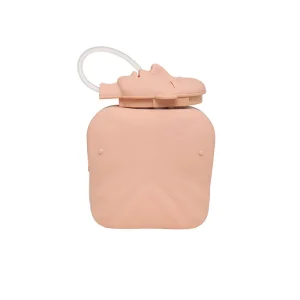
The model's facial skin, neck skin, chest skin, and other surface components are made from environmentally-friendly thermoplastic elastomer (TPE) composite materials. These materials provide a realistic tactile feel while meeting safety and environmental standards.
The model's head and neck assembly supports lateral rotation of up to 180 degrees, which allows trainees to practice oral foreign body clearance techniques realistically. Additionally, the head tilt–chin lift maneuver can be correctly performed to simulate proper airway opening procedures.