Explore our high-performance clinical simulators configured with real-time haptic feedback mechanisms, AHA compliance, and advanced airway management capabilities.
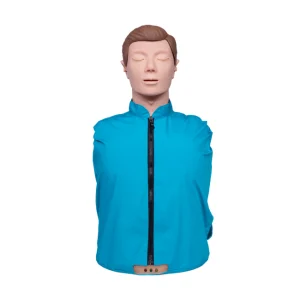
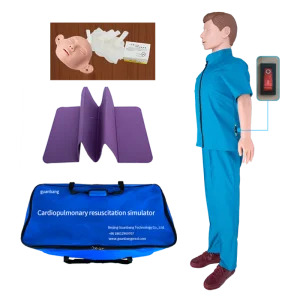
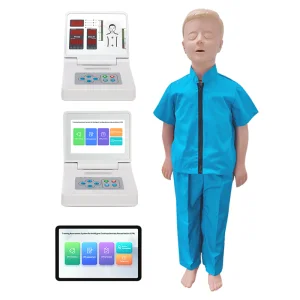
Redefining emergency medicine pedagogy through hyper-realistic haptic simulation systems.
The global healthcare simulation industry is undergoing an unprecedented shift. As emergency response teams, educational facilities, and military academies integrate sophisticated pedagogical frameworks, the traditional "basic resus dummy" is no longer sufficient. Modern clinical environments require high-fidelity simulators that mimic human anatomy with precision, collect chest compression data in real time, and conform to rigorous international resuscitation guidelines, such as those set by the American Heart Association (AHA) and European Resuscitation Council (ERC).
Beijing Guanbang Medical Technology Co., Ltd., established in 2016, stands at the intersection of this technological revolution. Leveraging a robust research paradigm led by experts from institutions like the Chinese Academy of Sciences and Tsinghua University, Guanbang designs medical training models that bridge the gap between simulation and real-world clinical application. By leveraging advanced materials engineering and integrated smart feedback software, we empower medical training centers worldwide to mitigate patient risk, improve CPR performance metrics, and foster highly resilient emergency response capacities.
Key technological advancements reshaping the future of medical and rescue simulation training.
Modern resuscitation training demands immediate analytical assessment. High-end simulators are now embedded with Bluetooth and Wi-Fi-enabled sensors that measure compression depth, hand placement precision, chest recoil velocity, and ventilation volume in real time. Instructors and trainees receive immediate digital assessment charts, optimizing the clinical learning loop.
There is a growing global demand for human-like skin materials that mimic the elastomeric resistance of human muscle tissues. Standard PVC polymers are being replaced by high-durability thermoplastic elastomers (TPE) and premium silica gels. These advanced polymers ensure life-like anatomical landmarks, realistic chest compliance, and superior tear resistance during intensive training regimens.
The industry is rapidly steering toward hybrid simulation modules. Resuscitation manikins are designed to interact with Augmented Reality (AR) headsets and Virtual Reality (VR) environments. Trainees practice chest compressions while responding to dynamic, visually immersive emergency room or battlefield environments, preparing them for the sensory overload of real-world emergencies.
Established In
Technical Specialists
Production Personnel
Annual Production Capacity
Understanding the compliance, scaling, and quality-assurance priorities of institutional buyers.
Educational institutions, public service providers, and hospitals have zero tolerance for non-compliance. Resuscitation models must align seamlessly with contemporary AHA or ERC protocols. This includes support for the 30:2 compression-to-ventilation ratio, precise chest compression depths (5–6 cm for adults, 4–5 cm for children), and electronic warning modules that flag insufficient recoil or hyperventilation. Guanbang's simulators are pre-configured to meet these global medical paradigms, securing international acceptance.
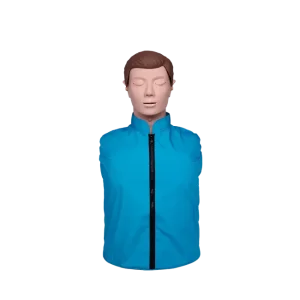
Every region has unique localized teaching preferences and compliance benchmarks. Procurement directors require tailored options, from multi-lingual voice prompts and localized electronic control system software, to structural variations (e.g., full-body simulators vs. portable half-body models). Beijing Guanbang's specialized R&D department works in sync with clients to deliver bespoke engineering, fulfilling specific hardware, software, and cosmetic specifications.
High-volume buyers seek durable solutions that minimize continuous operational costs. Cheap manikins often suffer from lung bag leaks, mechanical joint failures, or skin staining. Guanbang address this by utilizing industrial-grade internal spring components, modular airway paths that allow easy cleaning/replacement, and advanced composite skins that resist wear. This longevity maximizes the lifespan of simulators in high-intensity training, significantly lowering the overall TCO.
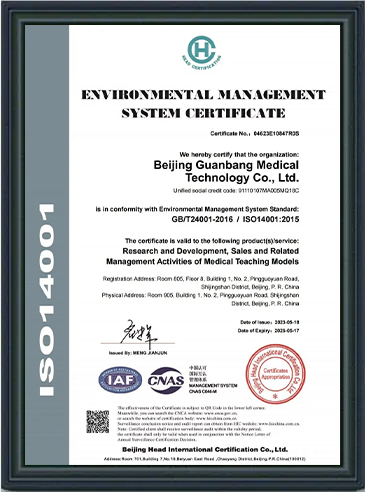
Importing medical simulation products requires rigorous regulatory compliance. Beijing Guanbang Medical Technology maintains comprehensive certifications, including international standard Quality Management, Environmental Management, and Occupational Health and Safety Management systems. Equipped with professional testing reports, utility models, and software copyrights, we provide global procurement agents with complete peace of mind.
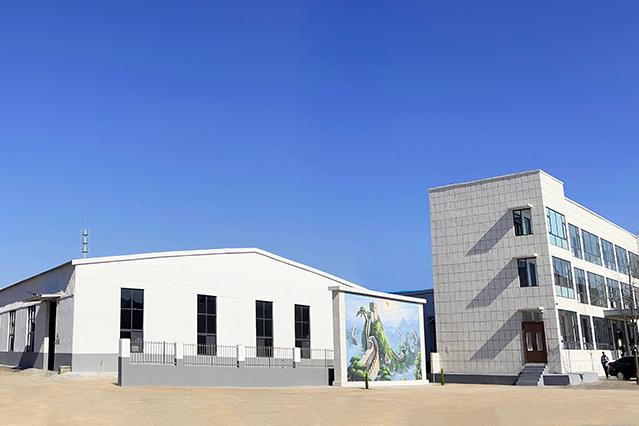
How Guanbang leverages digitalized production systems to maintain high quality and competitive supply chains.
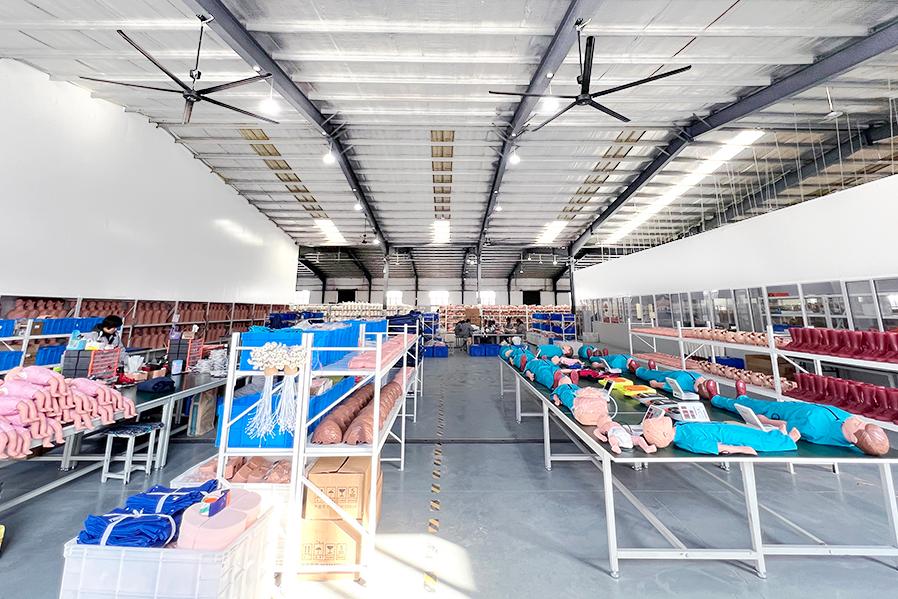
Operating from our modern 10,000-square-meter manufacturing facility in Beijing, Guanbang integrates the key tenets of China Industry 4.0. We utilize precision computerized injection molding machines, advanced CNC structural tools, and automated testing rigs. This extensive infrastructure enables us to achieve a massive annual production capacity while maintaining tight tolerance thresholds for all mechanical and electronic components.
Our raw material supply chain benefits from regional industrial clusters, granting us direct access to high-grade non-toxic polymers and advanced electronic sensors. Furthermore, by maintaining in-house control over the entire production cycle—from mold design to sensor integration—we mitigate third-party supply chain bottlenecks, ensuring stable lead times and excellent price-to-performance ratios for our global partners.
Our corporate journey, specialized engineering capabilities, and commitment to medical simulation excellence.
Founded in Beijing in 2016, Beijing Guanbang Medical Technology Co., Ltd. is a high-tech medical simulation innovator. Our business encompasses research and development, design, manufacturing, sales, and service, dedicated to providing high-quality simulation training models and services for medical education and training institutions. Operating out of our modern 10,000-square-meter production hub, we oversee a complete product lifecycle to ensure rigorous quality control at every stage.
Our core R&D team consists of highly skilled specialists, with lead technical developers holding master’s and doctoral degrees from prestigious institutions including the Chinese Academy of Sciences, Tsinghua University, and Beijing University of Technology. Supported by more than 20 technical specialists and 60+ skilled production personnel, Guanbang has developed comprehensive emergency training portfolios that are now utilized in dozens of countries by medical academies, hospitals, and civil defense agencies.
From tactical military medicine to community first-aid, our models deliver reliable training across various environments.
Beijing Guanbang recently showcased our advanced medical models at the 11th China (Beijing) Military Intelligent Technology & Equipment Expo. Military environments require highly durable models capable of simulating trauma, hemorrhage control, and airway management under extreme field conditions. Our ruggedized simulators provide tactical combat casualty care (TCCC) training for defense units.
Guanbang simulators are actively integrated into schools to enhance emergency preparedness. Facilitating hands-on practice, our simulators help students and educators master key life-saving steps. By working with academic institutions, we improve emergency response skills and build resilient, safety-focused campus environments.
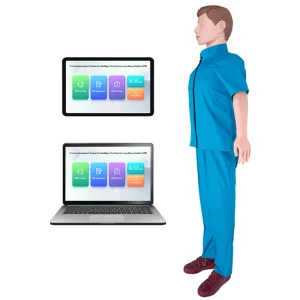
In partnership with the Zhengzhou Feiniao Emergency Team, Guanbang co-founded a public first-aid experience center. This center provides free community training, using our intelligent software-driven CPR manikins (enabling one instructor to manage multiple training units). This initiative helps the public gain practical resuscitation experience and confidence in emergency situations.
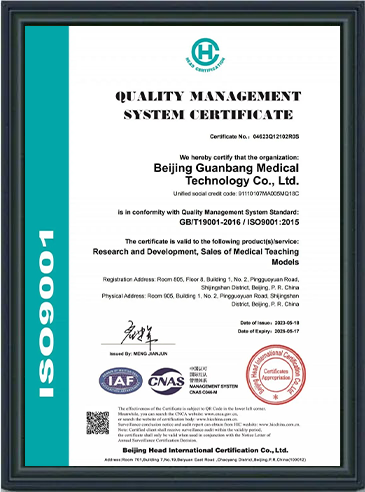
Our manufacturing processes and product designs are certified to meet rigorous global standards.
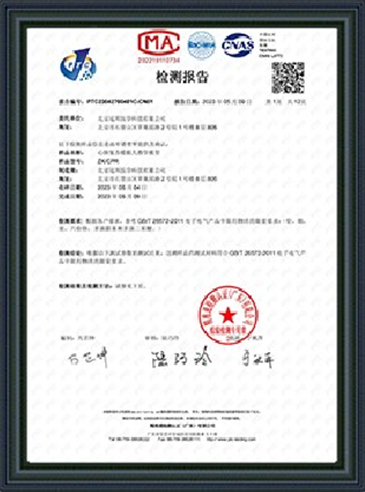
QMS Standards Certification
EMS Standard Compliance
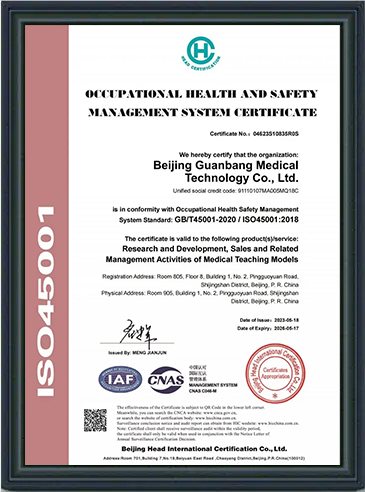
OHS Compliance Certification
Intellectual Property & Patents
Essential technical insights to help medical education purchasers make informed decisions.
To satisfy standard AHA criteria, a CPR simulator must possess a physical chest recoil sensation and accurately record compression metrics. Specifically, it should measure compression depths between 5 and 6 centimeters for adults and 4 to 5 centimeters for pediatric training. It must also feature feedback indicators that verify the target compression rate of 100 to 120 compressions per minute, alongside sensors that track ventilation volume to prevent gastric inflation.
We use premium medical-grade thermoplastic elastomer (TPE) skin materials coupled with resilient internal steel mechanics. Airway channels are designed with one-way valves or replaceable lung bags to eliminate cross-contamination during respiration classes. Our models undergo fatigue trials involving tens of thousands of compressions without mechanical deterioration, ensuring longevity.
Yes. Guanbang provides comprehensive OEM and ODM support. We can custom-program local language voice modules, design customized training dashboards, and engineer electronic indicator kits. We also provide customized multi-connection software systems that allow a single instructor's terminal to monitor up to several dozen training manikins simultaneously.
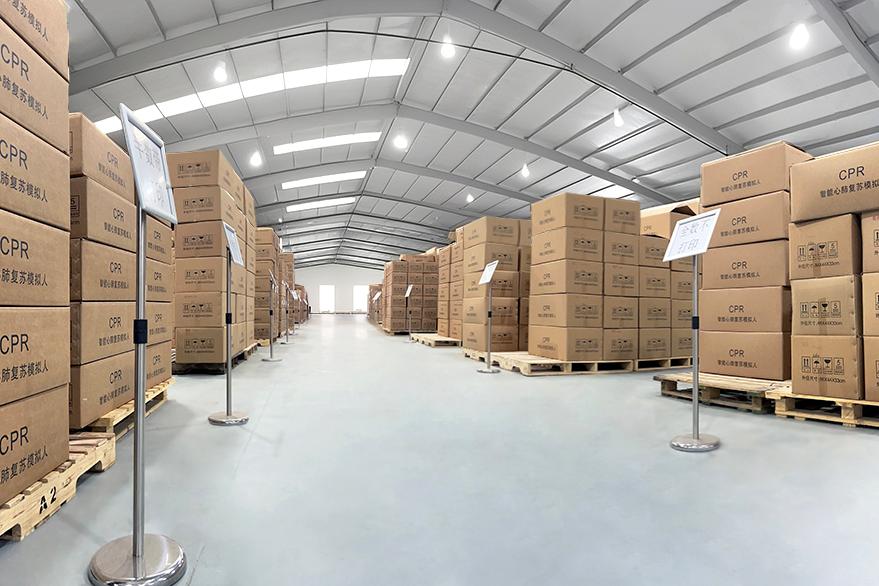
For standard products within our catalog, shipments are dispatched promptly from our Beijing facility. For custom ODM orders, the timeline typically ranges between two to four weeks depending on the level of software integration or mold alterations requested. Our 10,000-square-meter facility maintains a robust inventory of components, allowing us to manage large orders efficiently.
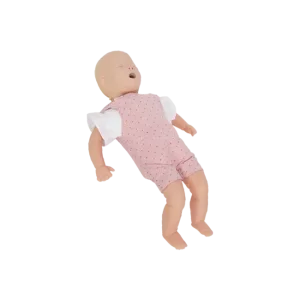
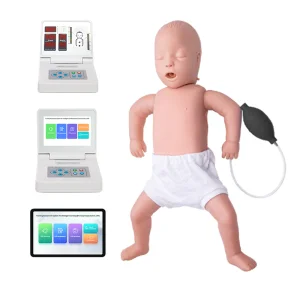
Our extensive lineup includes infant, pediatric, and adult models designed to meet various training and budget requirements.
 Guanbang Medical