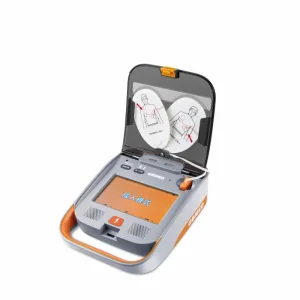
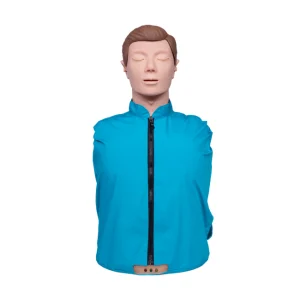
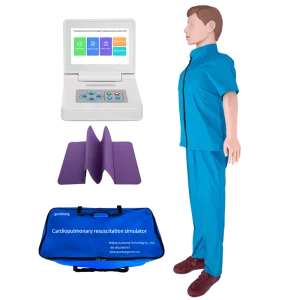
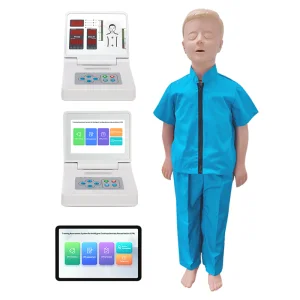
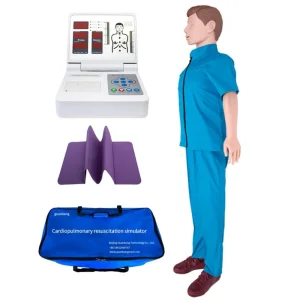
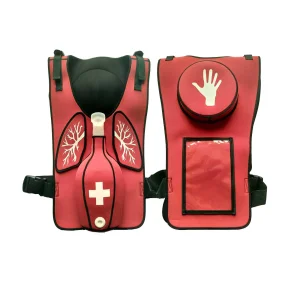
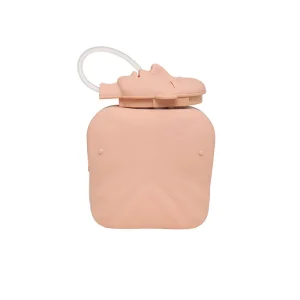
Engineered for Texas Medical Center specifications and rugged Petrochemical facility readiness, these models support AHA guidance protocols and real-time response diagnostics.
The Greater Houston metropolitan area functions as a key nexus for international logistics, heavy manufacturing, space exploration, and complex medical systems. Home to the Texas Medical Center (TMC)—the world's largest medical complex supporting over 106,000 healthcare professionals—and the energy giants spanning the Houston Ship Channel, the localized demand for robust first-aid training devices is highly specialized. Unlike standard retail markets, industrial operators and clinical institutions in Houston operate under rigorous liability and preparedness expectations.
Onshore drilling rigs, deep-sea exploration vessels, and chemical refineries across Harris County operate under strict OSHA 1910.151 mandates. In remote or high-voltage settings, immediate access to functional AEDs and highly trained responders is a critical regulatory safeguard. This requires AED trainers that simulate complex biphasic rescue shocks, high ambient noise operation, and multilingual rescue workflows to accommodate diverse contract workforces.
Our research indicates that simulation fidelity directly impacts compression performance during live emergencies. Modern emergency responder trainers are shifting away from passive plastic manikins to smart feedback systems. With the integration of digital micro-sensors, modern medical simulation trainers register compression depth, release velocity, and alignment anomalies. This technical integration ensures that when a trainee uses a training device, they build appropriate muscle memory for human emergency interventions.
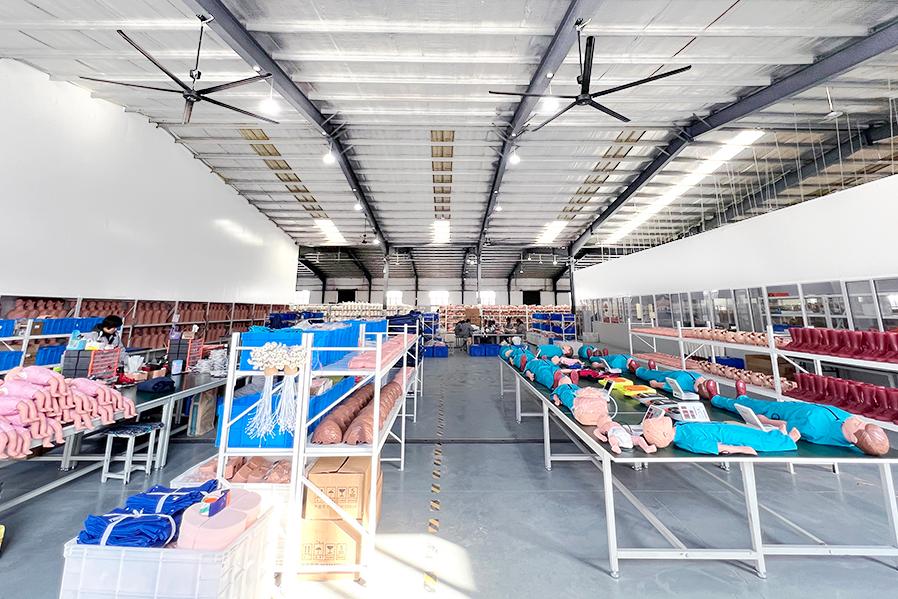
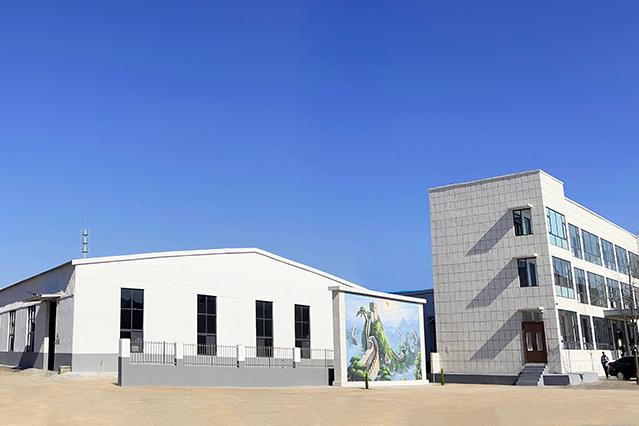
Founded in Beijing in 2016, Beijing Guanbang Medical Technology Co., Ltd. is an innovative enterprise specializing in medical simulation technology. Our modern production base covers approximately 10,000 square meters, handling the complete workflow from design and injection molding to functional testing and validation.
Our core engineering team brings together specialists with master’s and doctoral degrees from institutions such as the Chinese Academy of Sciences, Tsinghua University, and Beijing University of Technology. Backed by nearly 20 years of research and production expertise, we supply durable simulation equipment that aligns with international emergency protocols.
Our product lineup features AED trainers, adult and pediatric CPR manikins, and airway obstruction models. We support direct global distribution, offering options ranging from basic training models to comprehensive, software-integrated emergency training suites.
Procuring first-aid and medical simulation equipment on a global scale requires balancing technical compliance with supply chain reliability. For corporate safety managers and equipment distributors, ensuring that AED trainers match the physical feedback, button placement, and visual cues of clinical defibrillators is critical to real-world performance.
Our production facilities maintain certifications in ISO 9001, ISO 14001, and ISO 45001, ensuring trace-level quality control across production runs. By managing mold design and sensor calibration internally, we reduce manufacturing errors and maintain long-term product consistency.
We work with logistics networks serving major commercial centers, including the Port of Houston, to manage shipping timelines and custom clearance logistics, helping international distributors receive equipment on schedule.
Designed to support comprehensive CPR training programs, these systems provide measurable performance tracking for healthcare systems and emergency responders.
Medical simulators must be built to withstand regular, high-frequency training use. The materials used in our simulators, including advanced thermoplastic elastomers and polyurethane foams, are selected to mimic human skin texture, chest elasticity, and anatomical landmarks. This physical feedback helps trainees practice accurate hand positioning and compression depth control.
We configure our simulator internal mechanics with calibrated steel springs designed to replicate human chest resistance (approx. 100-120 lbs of pressure for adult models). This design helps prevent trainees from learning incorrect compression techniques that could result in insufficient blood flow or rib fractures during a real rescue. Our electronic components, including sensor arrays and LED indicators, are sealed against moisture and dust to ensure reliable performance during multi-session training programs.
Our software-controlled models provide real-time guidance by measuring compression depth and rate, indicating when the trainee is maintaining the required 2 to 2.4-inch depth. The digital sensor systems identify incomplete chest recoil and provide warning alerts, helping trainees master high-quality chest compressions.
We are expanding our product roadmap to include IoT-enabled training networks. In future updates, multiple simulators will connect to a centralized instructor station, allowing trainers to manage multi-student sessions and analyze performance data simultaneously. This system is designed to support the training requirements of large enterprises, medical institutions, and municipal rescue squads.
Answers to common questions from distributors, corporate safety coordinators, and medical training academies regarding compliance, customization, and logistics.
Whether you are outfitting a petrochemical facility along the Houston Ship Channel, managing emergency systems for a hospital network, or expanding your product distribution inventory, our engineers can assist with your equipment requirements.
Send Inquiry Now Guanbang Medical