Advanced clinical simulators engineered for medical colleges, regional hospitals, and emergency training hubs in Ethiopia.

Compact, highly durable simulator designed for portable field training and rural clinical outreach programs across Ethiopia.
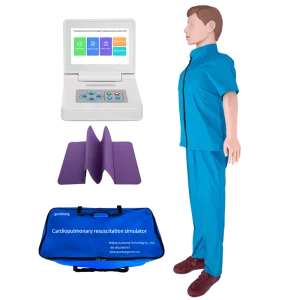
Features real-time parameter configuration, compression depth, and ventilation metrics on an integrated color touch panel.
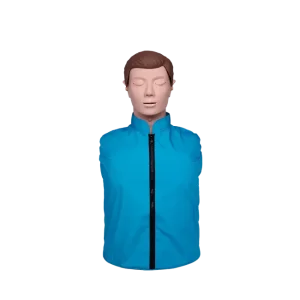
Cost-efficient, robust mechanical training structure ideal for large-class university clinical skills labs.
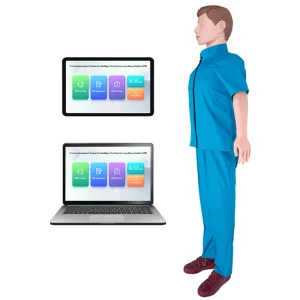
Combines budgetary viability with powerful computerized evaluation software to track student CPR performance timelines.
As the second most populous country in Africa, Ethiopia is undergoing an extensive health sector modernization program driven by the Ministry of Health (MoH). Central to this upgrade is the standardization of Emergency Medical Services (EMS) and basic/advanced life support capabilities within public and private healthcare institutes. Cardiopulmonary Resuscitation (CPR) remains a fundamental life-saving intervention required for nurses, emergency physicians, medical officers, and first responders.
Key training facilities, such as the Tikur Anbessa (Black Lion) Specialized Hospital in Addis Ababa, Jimma University, and Hawassa University, have identified a clear gap: the need for resilient, high-fidelity clinical training simulators. These devices allow students to practice critical motor skills, establish clinical workflows, and experience interactive, software-driven feedback before they enter high-stress clinical scenarios.
"Standardized CPR training with real-time audio-visual feedback mechanisms has shown to improve training retention rates by over 40% compared to traditional, non-feedback manikins in clinical cohorts across Sub-Saharan Africa."
Procuring CPR manikins and emergency simulators in Ethiopia requires devices that can withstand tropical environments, feature dust-resistant sensory grids, and operate on flexible power inputs (AC/DC rechargeable configurations) suitable for areas with unstable power grids.
Why international procurement managers, Ministries of Health, and medical colleges choose Beijing Guanbang Medical Technology.
Our core technical division consists of specialists holding master's and doctoral degrees from renowned research institutions, including the Chinese Academy of Sciences and Tsinghua University. We design realistic anatomical systems tailored to current international BLS (Basic Life Support) protocols.
Beijing Guanbang holds strict international certifications including ISO 9001 Quality Management, ISO 14001 Environmental Management, and ISO 45001 Occupational Health and Safety. Our products meet global standards for medical simulators, ensuring reliable import clearance at the Port of Djibouti.
We provide tailormade simulator designs to address specific regional needs. This includes software translations (e.g., Amharic localization for auditory voice prompts), specialized training mats, dynamic airway obstruction models, and custom voltage configurations.
Effective cardiopulmonary resuscitation training requires precision. Basic compression practice is no longer sufficient for modern clinical credentials. International guidelines, including those from the American Heart Association (AHA) and European Resuscitation Council (ERC), emphasize precise, measurable criteria that our simulators actively capture:
These objective metrics are crucial for educational institutions and medical training centers in Ethiopia. By using digital control hubs and real-time electronic indications, instructors can efficiently manage large groups of students, reducing subjectivity during clinical assessments.
A comprehensive lineup of adult, pediatric, and infant life support simulators to cover the entire training spectrum.
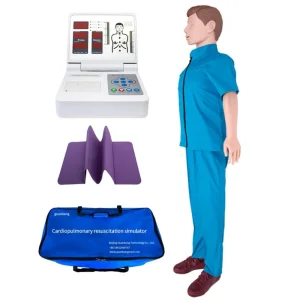
Offers clear numeric monitoring windows for chest compressions and artificial respiration metrics during training sessions.
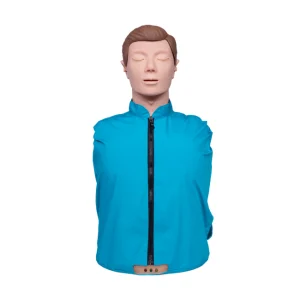
Features color-coded LED light grids directly on the shoulder plate to provide immediate feedback on compression depth.
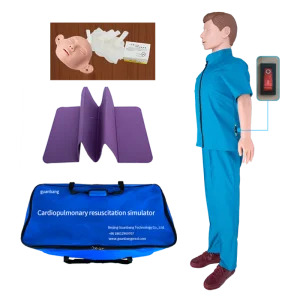
Equipped with real-time auditory instructions to guide students through compression rhythm and corrective techniques.
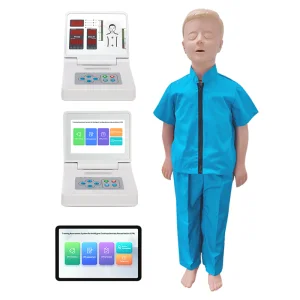
Designed specifically to mimic pediatric anatomy, chest compliance resistance, and airway properties for child care training.
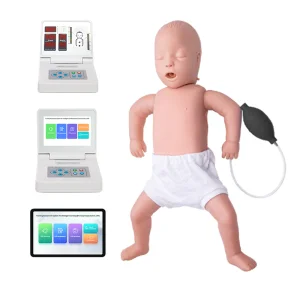
Anatomically accurate infant simulator built for neonatal resuscitation, pediatric emergency response, and infant airway management.
A heavy-duty training kit that comes with a rugged transit bag that doubles as a padded training pad, perfect for remote health clinics.
Designed for pediatric emergency training, offering reliable airway management features and realistic chest resistance dynamics.
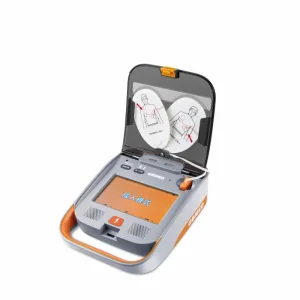
Simulates a wide range of shockable and non-shockable scenarios, preparing clinical staff for sudden cardiac arrest situations.
Navigating the import process for educational medical simulators in Ethiopia requires planning around transport routes, regulatory compliance, and distribution. Beijing Guanbang is a reliable medical training equipment supplier, providing comprehensive logistical support tailored to buyers in East Africa.
Our export division handles shipping from major ports in China directly to the Port of Djibouti. This is the primary maritime gate for goods destined for Addis Ababa via the Ethio-Djibouti Railway. We prepare all essential documentation, such as Certificates of Origin, detailed commercial pack lists, and compliance certifications, to support smooth customs clearance at local customs stations.
Our educational simulators are structured for straightforward import classification. Because they are training devices rather than patient-contact clinical hardware, they follow distinct regulatory pathways. We provide complete technical specifications and safety reports to simplify local regulatory processes for our importing partners.
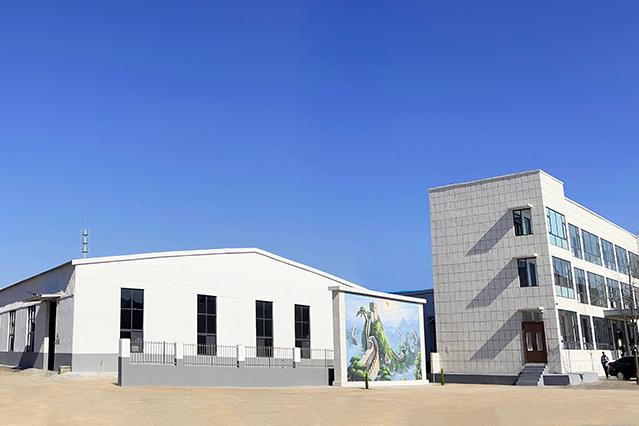
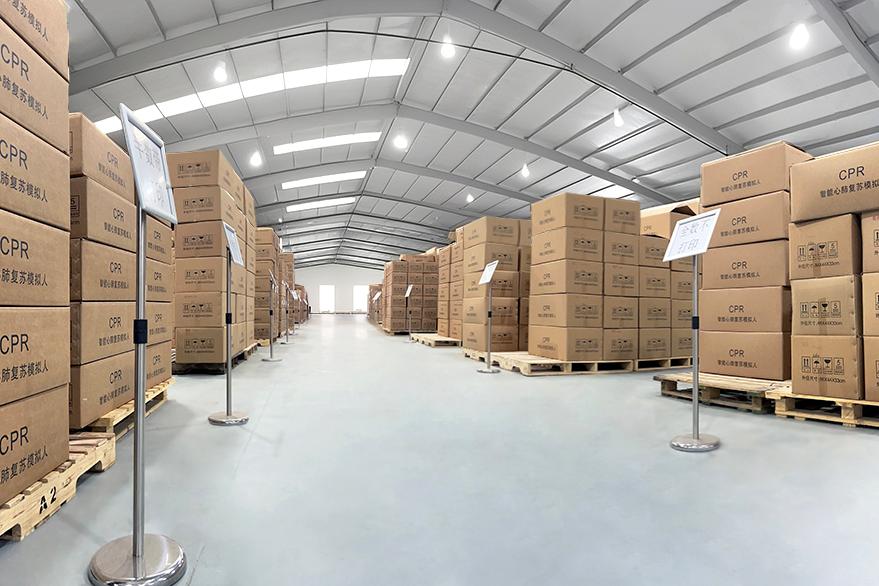
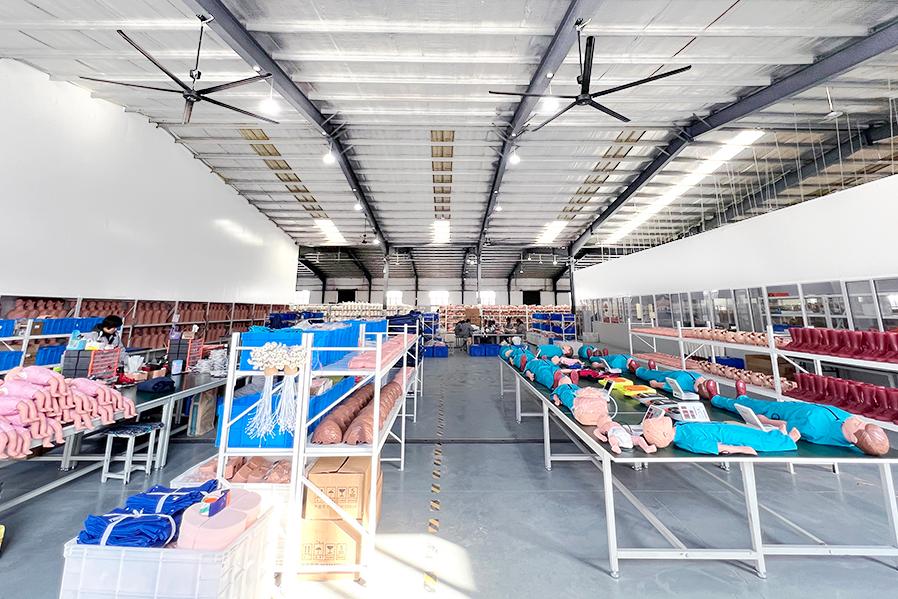
Founded in Beijing in 2016, Beijing Guanbang Medical Technology Co., Ltd. has developed into a leading developer of medical simulation models. Operating from a modern 10,000-square-meter manufacturing plant, we run a vertically integrated system covering research, design, production, and customer support.
Our equipment serves universities, teaching hospitals, corporate safety divisions, and rescue teams globally. Driven by continuous innovation, we focus on material safety, anatomical accuracy, and digital diagnostic software integration.
We invest in high-grade steel tooling molds to maintain consistent anatomical proportions and durability across production runs.
Our manikins use specialized thermoplastic elastomers to replicate the feel and resilience of human skin during chest compressions and airway management.
Every digital controller, sensory board, and physical spring mechanism is tested before packaging to verify calibration accuracy.
How we are integrating AI and wireless systems to support medical training in evolving medical sectors.
Moving from wired digital displays to Bluetooth-connected systems. A single instructor can monitor up to 10 manikins simultaneously using a central tablet, making classroom training in large universities more efficient.
Developing systems where student metrics can be stored online. This allows medical instructors at campuses across Ethiopia to track practical learning progress and performance history over time.
Developing durable, recyclable shell composites to minimize the carbon footprint of production while maintaining robust resistance to high-frequency cleaning and wear.
Key details for procurement coordinators, health officers, and import agents in the East African region.
Connect with our technical export division today. We can assist with technical specifications, international trade documentation, customization queries, and bulk price estimates.
Send Sourcing Inquiry Now Guanbang Medical