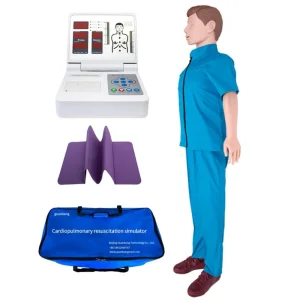
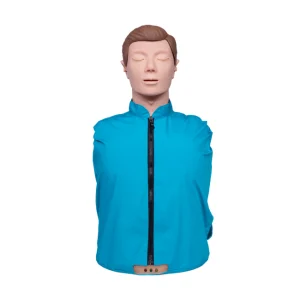
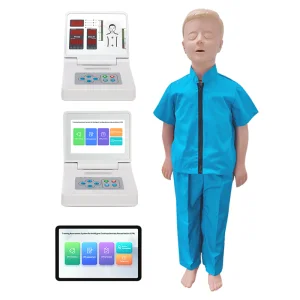
Designed for compliance with local clinical standards and high-fidelity pedagogical training.
Cardiopulmonary Resuscitation (CPR) is a pillar of emergency medicine and public health globally. In Finland, a country characterized by its progressive healthcare system, high digital integration, and stringent occupational health regulations, CPR training is not merely an optional safety measure—it is a legally frameworked clinical imperative. Finnish emergency response relies heavily on immediate, highly skilled intervention prior to the arrival of emergency medical services (EMS), known locally as *pelastustoimi*. To maintain these high rates of Out-of-Hospital Cardiac Arrest (OHCA) survival, Finnish healthcare providers, academic institutions, and defense forces require access to next-generation resuscitation simulators that provide real-time, data-driven feedback.
Finland’s social and healthcare reform (*Sote-uudistus*) has centralized medical procurement under specialized wellbeing services counties (*hyvinvointialueet*). This systemic centralization places a strong emphasis on standardization, fiscal efficiency, and objective training metrics. Consequently, the demand for high-fidelity training models has shifted from passive anatomical mannequins to digital, sensor-rich feedback networks. Finnish regulations, aligned with the European Resuscitation Council (ERC) and the Finnish Resuscitation Council (*Elvytysneuvosto*), mandate that healthcare personnel in hospitals, municipal health centers, and emergency service providers undergo regular, assessed CPR and Advanced Life Support (ALS) testing.
Globally, the medical simulation market is undergoing a significant transition from mechanical systems to IoT-enabled ecosystems. Resuscitation simulators are no longer static plastic models; they are analytical tools that capture compression depth, recoil rate, hand placement, chest compression fraction, and ventilation volume. This shift is driven by the American Heart Association (AHA) and ERC guidelines, which highlight the direct link between high-quality CPR and survival rates. In highly developed markets such as Europe, simulators must offer dual-language support, real-time performance analytics, and wireless control networks to allow instructors to manage multiple trainees simultaneously.
Founded in Beijing in 2016, Beijing Guanbang Medical Technology Co., Ltd. has established itself as an innovative, global designer and manufacturer of emergency simulation models. Spanning a state-of-the-art production facility of approximately 10,000 square meters, Guanbang integrates research, mechanical engineering, material processing, and digital development under one system. Our core R&D team comprises specialists holding advanced master's and doctoral degrees from premier research institutes, including the Chinese Academy of Sciences and Tsinghua University. By combining medical education theories with advanced materials engineering, we ensure that every simulator meets international standards of durability, anatomical precision, and feedback accuracy.
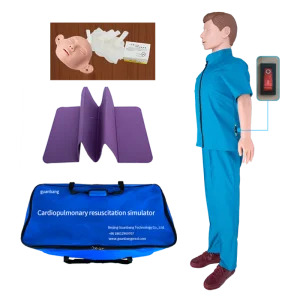
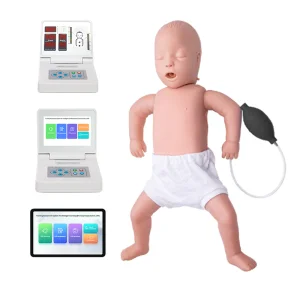
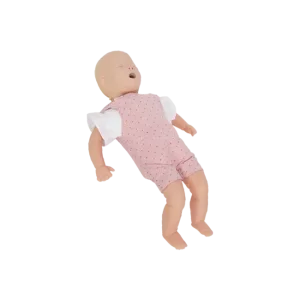
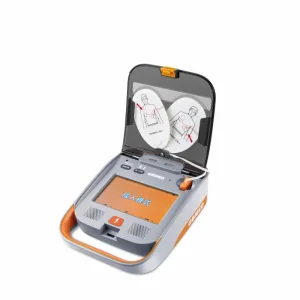
High-fidelity, specialized simulation models representing the complete patient spectrum from neonates to adults.
Emergency medical simulation requirements differ substantially depending on the environment, educational level, and target population. Our portfolio provides structured, compliant solutions across the main pillars of Finland's training sector:
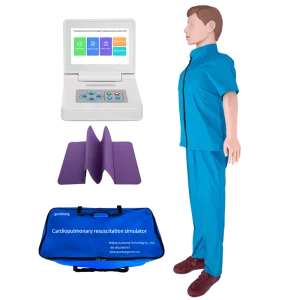
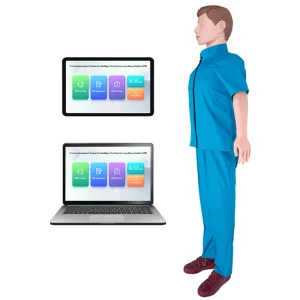
Finnish Universities of Applied Sciences (such as Metropolia, Laurea, and Novia) utilize our color touchscreen and digital control simulators to conduct objective clinical assessments (OSCEs). Real-time digital printouts and software interfaces allow for automated scoring of compression depth (5-6 cm) and rate (100-120 bpm).
Under Finnish Occupational Safety legislation (*Työturvallisuuslaki*), companies operating in forestry, maritime logistics, heavy metallurgy, and construction must maintain a high ratio of certified first responders. Portable simulators with basic functions and integrated electronic indications provide robust, on-site training solutions for these industrial groups.
Military field medics and municipal emergency services require ruggedized simulation platforms that operate outside controlled classrooms. Our portable, battery-operated CPR simulators are built using advanced polymer materials that withstand environmental shifts, simulating real-life field conditions.
Entering the Nordic medical education market requires strict adherence to EU directives and regional standards. Guanbang ensures full compliance across all aspects of delivery:
The next decade of emergency medicine education belongs to adaptive learning. Guanbang’s product roadmap focuses on integrating Artificial Intelligence (AI) and Mixed Reality (MR). By embedding high-precision optical sensors and spatial tracking within our manikins, future models will provide wireless, real-time data to instructors’ VR interfaces, simulating multi-patient triage scenarios. Cloud-based telemetry will allow wellbeing services counties in Finland to track the performance history of thousands of healthcare workers, identifying training gaps and predicting skill decay before it impacts patient outcomes.
Explore our comprehensive lineup of advanced medical simulators designed for schools, hospitals, and emergency services.
Technical and commercial answers for institutional buyers, healthcare professionals, and distributors in Finland.
Connect with our technical engineers to discuss localized software, customized feedback programs, and institutional bulk pricing.
Send Inquiry Now Guanbang Medical